 listicle
Family Dental Health Tips 2026: Smile Guide
Table of Contents
- Start With the Basics: Brushing and Flossing Done Right
- Why Preventive Dental Care for Children Sets the Tone
- Is Fluoride Treatment for Kids Worth It?
- Smart Tools for Your Family Dental Health Routine
- How to Choose a Family Dentist for Every Age
- Addressing Dental Anxiety and Building Positive Habits
- Your Family Dental Health Plan for 2026
- Frequently Asked Questions
Last Updated: September 7, 2026
Start With the Basics: Brushing and Flossing Done Right
Building a strong family dental health routine starts with mastering the fundamentals. The cornerstone is brushing twice a day for a full two minutes using a soft-bristled toothbrush and fluoride toothpaste. Rushing or brushing too aggressively risks damaging enamel and irritating gums, leading to sensitivity and recession over time.
A common mistake is treating flossing as optional rather than core. Daily flossing removes plaque from the roughly 40% of tooth surfaces that brushing cannot reach (the American Dental Association). For young children or anyone who finds string floss awkward, interdental tools like soft picks or a water flosser are just as effective when used consistently.
Consistency beats perfection. A routine everyone can stick to outperforms an elaborate one abandoned by February. Set a timer, play a two-minute song, and make it non-negotiable. Regular six-month check-ups remain essential for catching issues early.
Why Preventive Dental Care for Children Sets the Tone
Preventive dental care for children establishes the oral hygiene habits that carry into adulthood. The Canadian Dental Association recommends a child's first dental visit within six months of the first tooth appearing or by their first birthday (cda-adc.ca). Early visits help children become comfortable in the dental chair and allow the dentist to spot developmental concerns early.
When children understand why they brush, they become active participants in their own dental wellness. This is the age to build the connection between sugar intake and decay, and to make tongue cleaning and proper technique feel normal. Parents who model good behavior see their children mirror those habits.
The toddler and preschool years are when the oral microbiome is established. Limiting acidic foods and sugary drinks early shapes the bacterial environment and influences cavity prevention for years. A child who sees a dentist as a friendly ally is far more likely to maintain regular visits as an adult.
But preventive care does not end when the baby teeth fall out. Each developmental stage brings distinct challenges that require a shift in focus:
Toddlers and Preschoolers (Ages 1-5): The priority is desensitization and habit formation. Use a smear of fluoride toothpaste (about the size of a grain of rice) and brush gently twice daily. Avoid letting children fall asleep with a bottle of milk or juice, the sugars pool around the teeth and accelerate decay, a condition known as early childhood caries. Many pediatric dentists recommend a first professional fluoride varnish once primary molars erupt.
School-Age Children (Ages 6-12): Permanent molars arrive, and dental sealants become highly effective. Sealants are thin plastic coatings applied to the chewing surfaces of back teeth, where food and plaque accumulate in deep grooves. The Canadian Dental Association supports sealants as a proven way to reduce cavities by up to 80% in molars. Parents should supervise brushing until around age 8 to ensure proper technique and fluoride exposure.
Teenagers (Ages 13-18): Orthodontic treatment often begins here, and braces create new oral hygiene challenges. Teens with braces need interdental brushes or a water flosser to clean around brackets and wires. Dietary habits also shift, sports drinks, energy drinks, and frequent snacking increase acid exposure. Encourage water as the primary beverage and remind teens that acidic drinks erode enamel even when sugar-free.
Seniors (Ages 65+): Seniors in a multi-generational family face their own preventive needs. Dry mouth becomes more common due to medications, reducing saliva's protective effect and increasing cavity risk. Older adults should use fluoride toothpaste and may benefit from prescription-strength fluoride gels or rinses. Regular check-ups allow the dentist to monitor restorations and screen for oral cancer, which becomes more prevalent with age.
A family dental health plan that addresses each life stage ensures no one falls through the cracks. The goal is a flexible approach that adapts as children grow and grandparents age.
Is Fluoride Treatment for Kids Worth It?
Fluoride treatment for kids is widely considered safe and effective for strengthening developing enamel and reducing cavity risk. Fluoride remineralizes weakened enamel before decay takes hold, making it harder for acid-producing bacteria to cause damage. For children still mastering brushing or who consume occasional sugary treats, this extra protection can be significant.
Most Canadian municipalities add fluoride to the public water supply, providing baseline protection. Professional fluoride varnishes applied during a dental visit offer a more concentrated dose that adheres for several hours. Your dentist can assess your child's risk factors, diet, oral hygiene habits, and cavity history, to determine whether additional applications are beneficial.
The decision ultimately depends on your child's specific needs, which is why a conversation with your family dentist matters more than any general rule. Some children with excellent brushing habits and a low-sugar diet may not need extra fluoride treatments, while others with a higher risk profile clearly benefit. What remains non-negotiable is using a fluoride toothpaste with the appropriate level for your child's age, as confirmed by the Canadian Dental Association's guidance on fluoride use.
Smart Tools for Your Family Dental Health Routine
The right tools can transform a reluctant brusher into someone who looks forward to their dental routine. Home dental technology has shifted dramatically heading into 2026, moving beyond simple timers and pressure sensors into connected, data-driven devices that give real-time feedback on brushing quality.
Electric toothbrushes with built-in timers and pressure sensors remain the baseline recommendation, ensuring everyone brushes for two minutes without damaging gums. Models like the Philips Sonicare Kids Electric Toothbrush turn brushing into a game through a connected app, a game-changer for reluctant children.
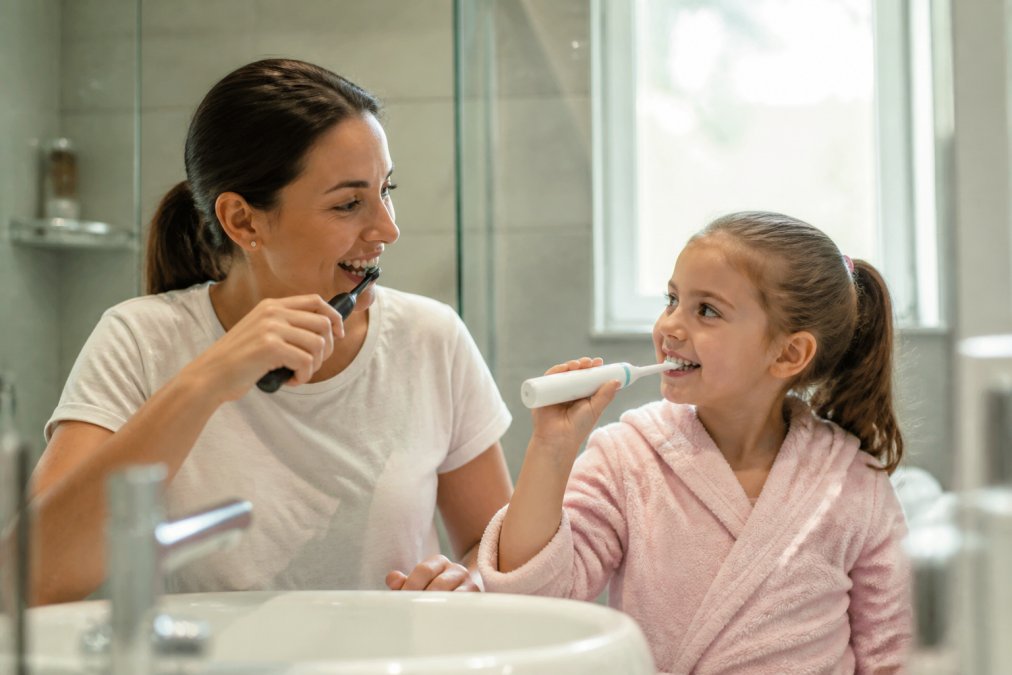
Artificial intelligence is reshaping home care. Several 2026-model electric toothbrushes feature AI-driven coaching that maps your mouth and identifies which quadrants you consistently miss. The Oral-B iO series uses position detection to guide you through each section, while newer models from Colgate and Philips integrate with apps that track brushing frequency and technique over time. This data can be shared with your dentist during check-ups, turning a routine cleaning into an opportunity to address problem areas.
For families who struggle with string floss, the Waterpik Aquarius Water Flosser offers a gentler alternative, particularly effective around braces and implants. Interdental brushes and soft picks are excellent for children developing fine motor skills. The table below outlines how different tools fit into a comprehensive family dental health plan.
| Tool | Best For | Key Consideration |
|---|---|---|
| Soft-bristled manual brush | Toddlers and young children | Replace every 3 months |
| Electric toothbrush with timer | School-age children and adults | Pressure sensor protects gums |
| AI-connected electric toothbrush | Families wanting technique feedback | Requires app setup and phone nearby |
| Water flosser | Braces, implants, or difficulty with string floss | Requires counter space and outlet |
| Soft picks | Children and sensitive gums | Single-use creates plastic waste |
| Fluoride toothpaste | Daily cavity prevention | Check age-appropriate levels |
Teledentistry has also become practical in 2026. Many provincial dental associations support virtual consultations for triage questions, whether a chipped tooth needs immediate attention or a sore gum can wait. Some clinics offer secure patient portals where you can send photos and receive guidance within hours, avoiding unnecessary emergency visits.
Quality tools pay off in fewer cavities and less gum disease. A family that enjoys their routine maintains it, so find products that fit your household's needs. When choosing between a basic and connected model, consider whether your family will use the app features, a simpler tool used consistently outperforms a sophisticated one abandoned by February.
How to Choose a Family Dentist for Every Age
Choosing a family dentist requires finding a practice that serves everyone from toddler to grandparent under one roof. A single clinic means fewer appointments to coordinate and a team that understands your family's complete health history. Look for a practice offering a full range of services, from preventive exams to restorative and cosmetic procedures, so you are not constantly referred to specialists.
A welcoming environment matters more than many parents realize. Children pick up on anxiety quickly, so a clinic designed to put young patients at ease sets the tone for a lifetime of positive visits. Having Invisalign available in the same office where teens get cleanings eliminates the stress of an unfamiliar specialist. Seniors often need gentle care for sensitive gums and restorations, requiring a dentist experienced in age-related changes.
Location and scheduling flexibility also play a practical role in how consistently your family keeps appointments. A conveniently located practice with easy parking and same-day emergency care can make the difference between addressing a problem early or spending hours in discomfort. The ALLDENT Family Dental team, led by Dr. Rami Gilada, focuses on personalized treatment plans that adapt as your family's needs evolve, supported by modern digital imaging technology for more precise diagnoses.
Addressing Dental Anxiety and Building Positive Habits
Dental anxiety is one of the most common reasons families delay necessary care, often beginning with a single negative childhood experience. The anticipation of pain can be so overwhelming that even routine cleanings get postponed, allowing minor issues to escalate. Acknowledging this fear openly and finding a practice that takes it seriously is the first step toward breaking the cycle.
Modern dentistry has evolved significantly in managing anxious patients. Digital imaging and minimally invasive techniques make procedures faster and more comfortable than many remember. A dentist who explains each step, offers breaks when needed, and uses a calm tone can transform the experience for even the most nervous patient.
Building positive habits goes beyond the dental chair. Involve children in choosing their own toothbrush and toothpaste flavor, use a sticker chart to reward consistent brushing, and keep sugary snacks out of the house so healthy choices become the default. The connection between mental health and dental health runs both ways; a healthy smile boosts confidence, while avoiding the dentist due to fear only compounds stress and guilt. For families in the Mississauga area seeking a calm environment for routine procedures, the patient-centered approach at ALLDENT Family Dental is designed specifically to ease these concerns.
Your Family Dental Health Plan for 2026
Looking ahead to 2026, the most effective family dental health plans embrace both time-tested fundamentals and modern advancements. Technological improvements make preventive care more precise and comfortable than ever. Families who thrive schedule six-month check-ups in advance, treat daily brushing and flossing as non-negotiable, and address concerns early rather than waiting for pain.
Building your family's 2026 plan does not have to be complicated. Book appointments for the entire household at the same practice, ideally on the same day. Stock your bathroom with the right tools for each age group, keep fluoride toothpaste on hand, and make water the beverage of choice. For families navigating insurance, choosing a clinic that works directly with CDCP insurance patients removes a significant barrier to consistent care.
Preventive care always costs less than treating advanced decay or gum disease, both financially and in discomfort. Families who invest in regular cleanings and check-ups experience fewer dental emergencies. The ALLDENT Family Dental team combines comprehensive preventive, restorative, and cosmetic services with modern digital technology to support patients of all ages.
Building a family dental health routine that actually sticks requires the right tools, consistent habits, and a dental team you trust. At ALLDENT Family Dental, Dr. Rami Gilada and our team provide comprehensive care for every age in a calm, welcoming environment, backed by modern digital imaging and personalized treatment plans. Whether you need a routine cleaning, same-day emergency care, or are exploring Invisalign for a teenager, we are here to support your family's dental wellness. Book an appointment today and give your family the foundation for a lifetime of healthy smiles.
Frequently Asked Questions
How often should children have their first dental exam?
Book a first visit by the time the first tooth appears or before the first birthday, whichever comes first. Early visits help children get comfortable with the dental office and let the dentist spot any developing issues. After that, schedule check-ups every six months unless your dentist recommends a different rhythm. Consistent preventive care keeps small concerns from becoming bigger problems.
Is fluoride treatment for kids worth it?
Fluoride treatments add a concentrated layer of protection against cavities on top of daily toothpaste use. For children who are still mastering brushing, have deep grooves in their molars, or show early signs of decay, the treatment offers a meaningful boost. Your dentist can tell you whether your child's risk level makes it a good choice at their next visit.
What is the 3-3-3 rule for dental?
The 3-3-3 rule is a simple memory aid: visit the dentist every 3 months, brush for 3 minutes, and wait 3 minutes after eating before brushing. It is not a medical standard, but it does reinforce the habit of regular check-ups and proper brushing time. Most dental professionals recommend check-ups every six months and two minutes of brushing twice a day.
What does a family dental health routine look like for different ages?
Toddlers need help brushing with a rice-sized smear of fluoride toothpaste. School-age kids can brush with supervision and a pea-sized amount, and flossing becomes essential once teeth touch. Teens often benefit from reminders about sugary drinks and sports mouthguards. Adults should focus on gum health and maintaining their routine, while seniors may need to manage dry mouth or medication side effects.