 listicle
Best Cosmetic Dentistry Treatment Options: 2026 Guide
Table of Contents
- Quick Comparison: Cosmetic Dentistry Treatment Options
- Teeth Whitening vs Bonding: Which Is Right for You?
- Porcelain Veneers: Cost of Dental Veneers and Long-Term Value
- Invisalign Treatment Duration and What to Expect
- Dental Implants and Bridges: Restoring Function and Appearance
- Crowns, Contouring, and Composite Resin: Minor to Major Fixes
- Your Consultation: Candidacy, Comfort, and Digital Smile Design
- Frequently Asked Questions
Last Updated: September 15, 2026
Quick Comparison: Cosmetic Dentistry Treatment Options
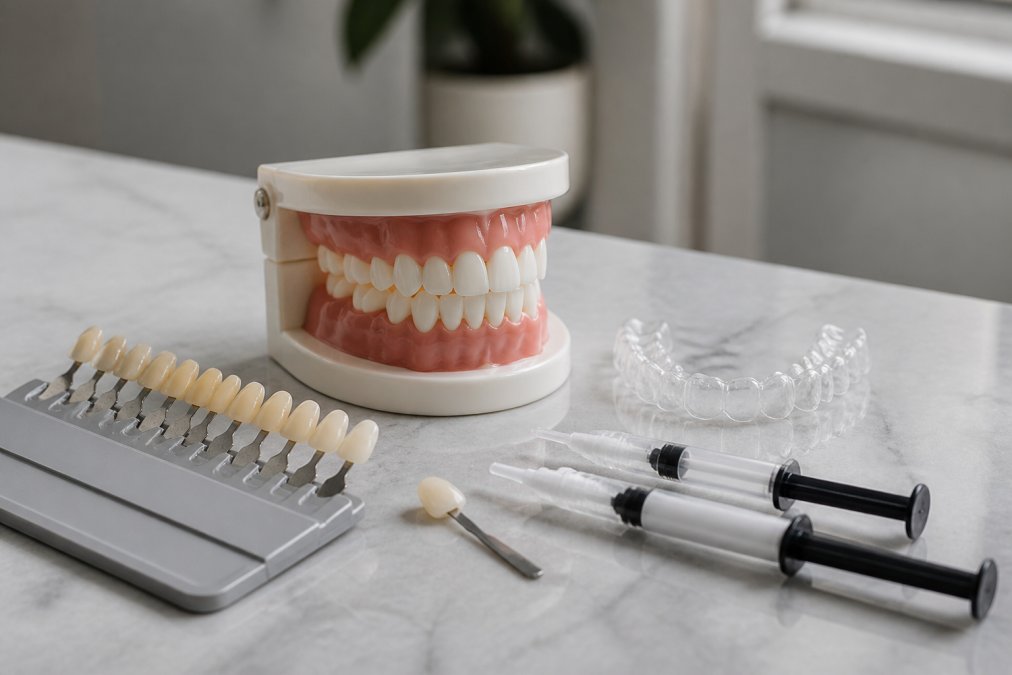
Cosmetic dentistry covers every treatment that improves how teeth look while protecting how they work. At ALLDENT Family Dental, we group the best cosmetic dentistry treatment options into two families: additive procedures that build up tooth structure (bonding, veneers, crowns) and subtractive or realigning procedures (contouring, whitening, clear aligners).
The table below maps each option to what it fixes, how long it lasts, and how invasive it is. Use it as a shortlist, not a diagnosis.
| Treatment | Best For | Invasiveness | Typical Longevity |
|---|---|---|---|
| Teeth whitening | Surface and deep stains | Non-invasive | Months to 2 years |
| Dental bonding | Chips, small gaps | Minimal | 3-5 years |
| Porcelain veneers | Shape, shade, symmetry | Moderate, irreversible | 10-15 years |
| Invisalign | Crowding, spacing, malocclusion | Non-invasive | Permanent with retainers |
| Implants and bridges | Missing teeth | Surgical or structural | 10+ years |
| Crowns and contouring | Damage, minor reshaping | Varies | 5-15 years |
Cost of dental veneers, whitening, and bonding varies by case complexity, how many teeth are involved and which materials your dentist recommends. Our team quotes every plan in writing before treatment starts.
Teeth Whitening vs Bonding: Which Is Right for You?
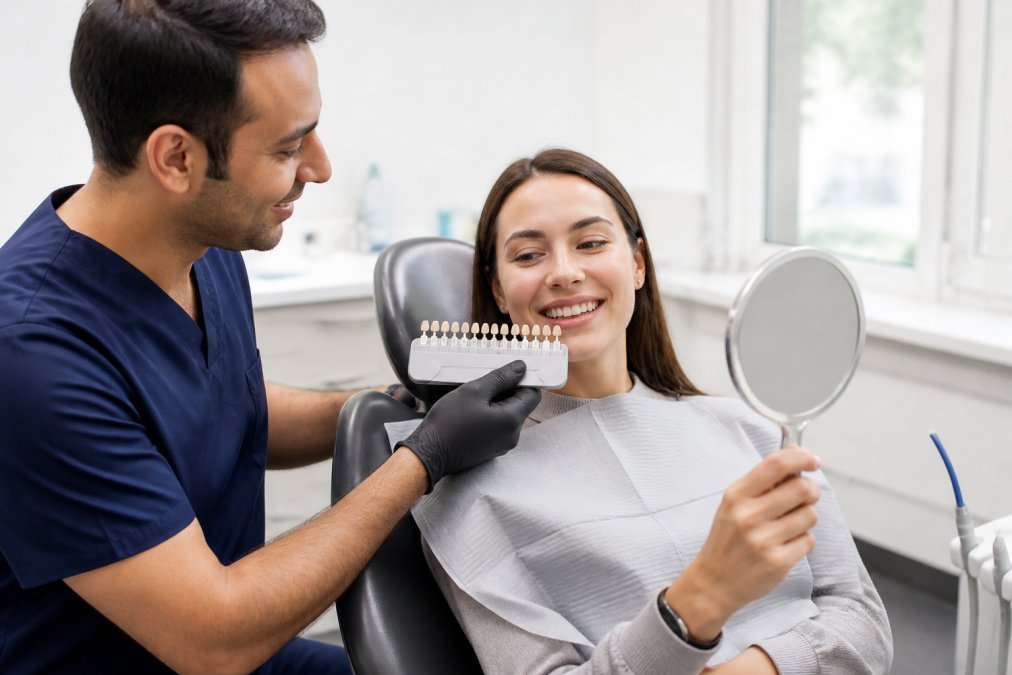
Teeth whitening vs bonding comes down to one question: are you changing the color of your existing enamel, or adding new material to rebuild a tooth? Whitening lifts stains from enamel and dentin using professional-grade agents; bonding sculpts tooth-colored composite resin onto the tooth surface.
Whitening suits healthy teeth dulled by coffee, tea, or time; bonding suits chips, cracks, or small gaps. The two often work together, since composite resin does not lighten with peroxide the way natural enamel does.
Professional whitening uses a higher peroxide concentration than over-the-counter kits, with custom trays and gum protection. Bonding is completed chairside in one visit with minimal removal of natural tooth structure.
Porcelain Veneers: Cost of Dental Veneers and Long-Term Value
Porcelain veneers are thin, custom-fabricated shells bonded to the front of teeth, and remain the benchmark for correcting shade, shape, and minor alignment in one treatment. The cost of dental veneers reflects laboratory work, material quality, and the number of teeth involved, so a single veneer and a full smile makeover sit at very different price points; our team provides a written estimate after your consultation.
Three variables drive the price:
- Material. Feldspathic and lithium disilicate (e.max) porcelain sit at different price tiers, each with a different strength and translucency profile. A single-tooth repair and a full-arch case rarely use the same material.
- Laboratory and technician time. A veneer is hand-layered or milled, then characterized by a ceramist to match neighboring teeth. Complex shade matching costs more than a stock shade.
- Number of teeth and case complexity. A six- or ten-unit smile makeover involves more chair time, lab work, and planning than a two-tooth fix.
Where veneers earn their keep is longevity. Porcelain resists staining from coffee, tea, and tobacco far better than composite resin, and with good dental hygiene a well-made veneer can serve a decade or longer. But longevity is not zero maintenance. Budget for the full ownership cycle:
- Replacement horizon. Most practitioners find porcelain veneers need replacement or significant repair somewhere in the 10-to-15-year window. Composite bonding, by contrast, typically needs refreshing every 3 to 5 years.
- Repair vs. replace. A chipped porcelain veneer often cannot be spot-repaired the way composite can; it may need remaking, the hidden cost of the porcelain upgrade.
- Protective appliances. Patients who grind or clench will be advised to wear a night guard. That is a recurring cost, not a one-time purchase.
- Ongoing hygiene and checkups. Professional cleanings and exams protect the margin where the veneer meets the gum; neglect it and you shorten the veneer's life.
The trade-off is permanence: preparing a tooth for a veneer removes a small layer of enamel that does not grow back. A good candidate has healthy enamel, stable gums, treated decay, and a bite that will not overload the restorations. Patients with active gum disease, heavy untreated grinding, or significant decay should address those first, placing veneers over an unstable foundation wastes the investment.
Canadian Dental Association, oral health and cosmetic treatment guidance
Invisalign Treatment Duration and What to Expect
Invisalign treatment duration typically runs 6 to 18 months for adults, depending on how much alignment correction is needed. Minor spacing cases finish in a few months; complex malocclusion takes longer. Your dentist confirms the timeline with 3D imaging before you commit.
The system uses a series of removable clear aligner trays, each nudging teeth a fraction of a millimeter toward the planned position. Digital treatment planning lets you preview the projected result before the first tray is worn.
Compliance decides the outcome. Aligners must stay in 20 to 22 hours a day, removed only for eating, drinking anything but water, and brushing. Patients who treat aligners as optional extend their own treatment.
Retainers are part of the package, not an upsell. Teeth drift back without them, and that ongoing cost belongs in your budget from day one. Invisalign suits adults and teens who want discreet orthodontics without fixed metal braces.
Dental Implants and Bridges: Restoring Function and Appearance
Dental implants and porcelain bridges both replace missing teeth, but differently. An implant places a titanium post into the jawbone and caps it with a custom crown, mimicking a natural tooth root. A bridge anchors a false tooth to the healthy teeth on either side.
Implants preserve jaw bone and do not rely on neighboring teeth for support, making them the preferred long-term fix. The trade-off is a surgical timeline: healing between placement and final crown takes months. Bridges deliver a fixed, natural-looking result faster and suit non-implant candidates, but require preparing the adjacent anchor teeth. (Source: dental bonding)
Restorative dentistry at this level is about function first: a comfortable, functional bite protects the remaining teeth from drifting out of position.
Crowns, Contouring, and Composite Resin: Minor to Major Fixes
Crowns, dental contouring, and composite resin cover the widest range of fixes, from a chipped front tooth to a tooth rebuilt after root canal therapy. A crown encases the visible portion of a damaged tooth in porcelain or ceramic, restoring strength and shape. Contouring removes small amounts of enamel to smooth jagged edges and minor overlaps in a single painless appointment. Composite resin handles tooth-colored fillings and small repairs without laboratory work.
The decision follows damage severity: minor chips and cosmetic gaps point to bonding or contouring, while structural weakness or heavy decay points to a crown. These treatments are not purely aesthetic, a crown that protects a cracked tooth is restorative dentistry doing cosmetic work at the same time.
Gum contouring and gingivectomy address the frame around the teeth. Reshaping uneven gum lines can make short-looking teeth appear longer and more balanced, often as a finishing touch after orthodontics or veneers.
Your Consultation: Candidacy, Comfort, and Digital Smile Design
A cosmetic consultation answers three questions: are you a candidate, what will it feel like, and what will the result look like?
Are you a candidate? A self-assessment starting point
Candidacy is procedure-specific, and the starting point is your own oral health history. Before any cosmetic work, a dentist will typically confirm:
- Gum health. Active periodontal disease or untreated gingivitis is a stop sign.
What will it feel like? Comfort, procedure by procedure
What will it look like? How digital smile design works
Frequently Asked Questions
What is the best cosmetic dental procedure for stained teeth?
Professional teeth whitening is often the most effective for extrinsic stains from coffee, tea, or tobacco. For deeper intrinsic stains or discoloration from medication, porcelain veneers or bonding may provide better coverage. A consultation with a cosmetic dentist can determine which option suits your enamel condition and aesthetic goals. Whitening uses peroxide-based agents to lift stains, while veneers mask the tooth surface entirely.
How long do common cosmetic dental treatments typically last?
Longevity varies by treatment: professional whitening results can last from several months to a few years with good oral hygiene; composite bonding typically lasts 3 to 7 years; porcelain veneers can last 10 to 15 years with proper care; and dental implants may last decades. Maintenance visits and avoiding habits like nail-biting or chewing ice help extend the life of any restoration. Your dentist can provide personalized estimates based on your bite and lifestyle.
Are cosmetic dental procedures covered by private insurance plans?
Most private dental insurance plans in Canada focus on preventive and restorative care, so purely cosmetic treatments like whitening or veneers are often not covered. However, procedures that restore function, such as crowns or implants after an accident, may receive partial coverage. It's best to check your specific policy and ask your dental office to submit a pre-treatment estimate. Some plans offer flexible spending accounts that can be used for cosmetic work.
What is the difference between dental veneers and dental bonding?
Veneers are custom-made shells, usually porcelain, that are bonded to the front of teeth and typically require some enamel removal. Bonding uses a tooth-colored composite resin applied directly to the tooth and sculpted by the dentist, often in a single visit with minimal to no drilling. Bonding is less expensive and reversible, while veneers offer greater durability and stain resistance. The choice depends on your budget, timeline, and desired outcome.
How do I choose the right cosmetic dentist for my treatment?
Look for a dentist with experience in the specific procedure you want, such as veneers or Invisalign. Check before-and-after photos, read patient reviews, and ask about their approach to comfort and pain management. A thorough consultation should include a candidacy assessment, digital imaging, and a customized treatment plan. In Mississauga, ALLDENT Family Dental offers personalized care with modern technology and a calm environment for anxious patients.