 listicle
Benefits of Digital Dental Scans: A Patient's Guide
Table of Contents
- What Are Digital Dental Scans?
- Digital Dental Impressions vs Traditional Molds: Key Differences
- Digital Dentistry Patient Comfort: A Calmer Experience
- How Long Do Digital Dental Scans Take?
- Enhanced Accuracy for Better Treatment Planning
- Safety, Reduced Waste, and Long-Term Value
- Experience the Difference at Your Next Visit
- Frequently Asked Questions
Last Updated: September 8, 2026
What Are Digital Dental Scans?
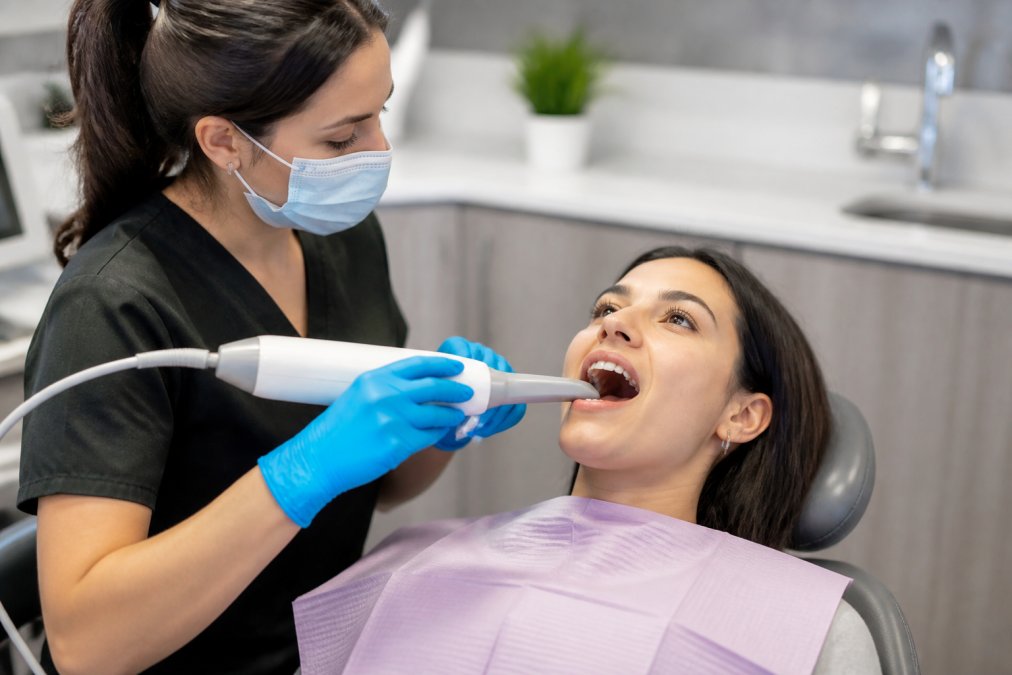
A digital dental scan is a process where your dentist uses an intraoral scanner, a small wand-like camera, to capture highly detailed 3D images of your teeth and gums. This technology replaces the traditional method of biting into trays filled with impression material. The wand projects light onto your teeth while sensors record thousands of images per second, instantly assembling them into a precise digital model on a screen. At ALLDENT Family Dental, we use this modern approach to make every exam and treatment more comfortable and accurate.
Digital dental scans are a core part of a modern digital workflow, connecting directly with tools used for restorative dentistry and orthodontics. The resulting 3D model gives your dentist a complete view of your mouth, from the health of individual teeth to the alignment of your bite. This real-time visualization is a significant upgrade from conventional methods, allowing you to see exactly what your dentist sees as the scan happens.
Digital Dental Impressions vs Traditional Molds: Key Differences
The most immediate difference between digital dental impressions vs traditional methods is the physical experience. Traditional molds require you to bite into a tray filled with either alginate or polyvinyl siloxane putty. For many, this triggers a gag reflex or feels claustrophobic, and the material can take several minutes to set.
Digital scans eliminate that entire sensation. A thin wand moves gently around your mouth, capturing the same information in a fraction of the time. The table below outlines the core differences:
| Feature | Digital Scan | Traditional Mold |
|---|---|---|
| Patient Experience | Wand glides over teeth, no gagging | Tray with putty can cause gagging |
| Time to Capture | Minutes for a full arch | Several minutes of setting time |
| Accuracy | High-resolution 3D imaging | Risk of distortion or bubbles |
| Real-Time Feedback | Yes, viewable instantly | No, sent to lab in physical form |
| Data Storage | Digital file, easy to store and send | Physical model, requires storage space |
This shift to digital dental impressions vs traditional molds also improves the final product. Conventional materials can shrink or tear, leading to ill-fitting crowns or aligners. A digital scan captures exact dimensions, reducing the margin for error and improving the fit of restorations.
Digital Dentistry Patient Comfort: A Calmer Experience
For anyone who feels anxious in the dental chair, the scan itself is a welcome change. Digital dentistry patient comfort begins with the removal of the most unpleasant step in many procedures. With a digital dental scan, there is no pressure, no unpleasant taste, and no struggle to hold your mouth open while material sets.
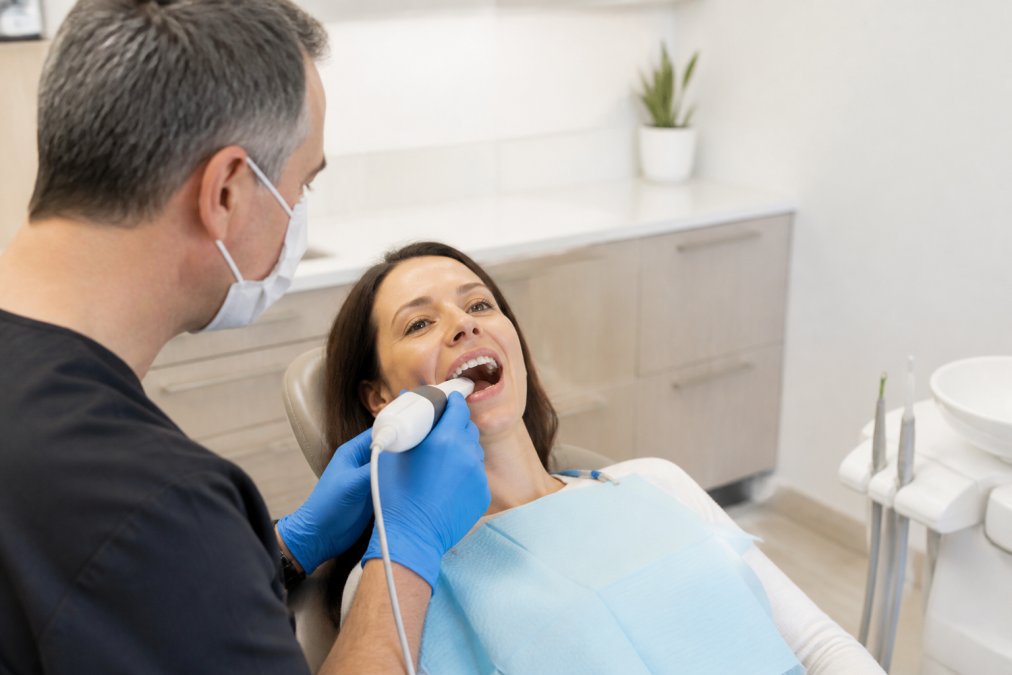
The scan also shortens the time you spend with instruments in your mouth, which is a major factor for nervous patients. The wand is slim and quiet, and the dentist can pause at any moment if you need a break. Beyond the physical comfort, seeing your teeth on the screen in real time can transform anxiety into engagement. You can watch your dentist point out areas of concern, turning a passive experience into a collaborative conversation about your care.
How Long Do Digital Dental Scans Take?
A full-arch digital dental scan typically takes just a few minutes to complete. The actual capture time for one arch is often under one minute, but the whole process, including setup and reviewing the images, usually fits within a 5 to 10 minute window. This is considerably faster than the traditional method, which can take several minutes just for the material to set.
To understand why it is faster, it helps to know what happens during the scan. The process breaks down into three distinct phases:
- Preparation: Your dentist may apply a light dusting of powder to create a matte surface on your teeth, which helps the scanner capture accurate data. This takes about 30 seconds.
- Capture: The wand is passed over each arch in a systematic pattern. The scanner takes thousands of images per second and stitches them together in real time. If the wand loses track of a surface, the software flags it immediately, so your dentist can re-scan that spot on the spot rather than discovering an error later.
- Review and approval: The software generates a 3D model that your dentist inspects on screen, checking margins and bite alignment before sending the file to the lab or milling machine.
The speed varies based on the complexity of your case. A simple scan for a single crown is quicker than a full-mouth scan for orthodontic planning. However, even complex cases are captured far faster than with conventional impression materials. Because the scan is instant, your dentist can immediately check the quality of the image and re-scan any area if needed, without making you wait or repeat an uncomfortable process.
This efficiency translates to shorter appointment times and a more efficient overall visit. But the most significant patient-facing benefit is the possibility of same-day dentistry. When a practice has an in-house milling unit, the digital scan feeds directly into the design and fabrication of a ceramic crown while you wait. Instead of wearing a temporary crown for two weeks and returning for a second appointment, you leave with your permanent restoration in a single visit. This workflow, often called CAD/CAM (computer-aided design and computer-aided manufacturing), can turn a two-appointment procedure into a single-visit experience. Ask your dentist whether they offer same-day restorations and how their digital workflow is set up.
Enhanced Accuracy for Better Treatment Planning
The high resolution of digital dental scans provides a level of diagnostic accuracy that traditional molds cannot match. The 3D imaging captures fine details, including the margins of a tooth where it meets the gum, which is critical for a well-fitting crown. This precision supports better treatment planning for everything from cavity detection to evaluating bone loss associated with gum disease.
The digital file allows for image manipulation that was previously impossible. Your dentist can zoom in on a specific tooth, adjust the contrast, or take precise measurements of spaces and angles. This is particularly valuable in orthodontics, where planning tooth movement requires exact data. Furthermore, the scan integrates seamlessly with CAD/CAM technology. This connection allows your dentist to design restorations on the computer and, in some practices, mill them chairside in a single visit. The digital workflow also enables easy data storage and sharing with specialists or labs, ensuring everyone involved in your care works from the same precise 3D model.
Safety, Reduced Waste, and Long-Term Value
Digital dental scans are a safer and more sustainable option than traditional methods. The scanner uses optical technology, meaning it is radiation-free. This is a clear advantage over radiographs for soft tissue assessment, though traditional x-rays remain a vital tool for checking between teeth and under existing restorations where the scanner cannot see.
Understanding Radiation Exposure in Dental Imaging
A common patient concern is radiation exposure from dental X-rays. It is helpful to put this in perspective. A standard digital dental X-ray (a single intraoral radiograph) exposes you to roughly 1 to 5 microsieverts of radiation. For comparison, a typical cross-country flight exposes you to about 40 microsieverts, and the average person receives about 3,000 microsieverts per year from natural background radiation. Dental X-rays are among the lowest-dose medical imaging procedures available.
Digital scans add zero radiation to that picture. They use structured light and optical sensors, not ionizing radiation. This makes them an excellent tool for monitoring soft tissue health, checking for early signs of gum recession, or evaluating the fit of existing restorations without adding to your cumulative radiation exposure. Your dentist will still recommend periodic X-rays to detect cavities between teeth or bone loss beneath the gum line, but every scan reduces the number of X-rays needed over time.
The Cost-Benefit Picture for Patients
From a financial perspective, digital scans often save patients money in ways that are not immediately obvious. Consider the traditional crown workflow: if a physical impression distorts or tears, the lab may produce a crown that does not fit. The dentist then has to remake the crown, which means an additional lab fee and another appointment for you. Digital scans reduce this risk substantially because the 3D model is dimensionally accurate and can be checked against the preparation in real time.
Additionally, because the scan is stored digitally, if you need a replacement crown years later, your dentist may be able to retrieve the original file and send it directly to the lab without taking a new impression.
Environmental Impact Beyond the Chair
The waste reduction goes beyond eliminating impression trays and putty. Traditional impressions must be disinfected, boxed, and shipped to a lab, which involves packaging materials and transportation emissions. Digital files transfer electronically in seconds.
Considering the long-term cost-benefit analysis, digital scans often save patients money. The precision reduces the likelihood of poorly fitting crowns or aligners that need to be remade, which can carry additional lab fees. While the technology itself is an investment for the clinic, for you, it often means fewer adjustments, fewer return visits, and a more predictable outcome. This focus on getting it right the first time is a key part of modern, minimally invasive care.
Experience the Difference at Your Next Visit
The shift from goopy molds to a gentle wand is one of the most significant improvements in modern dental care. For patients, the benefits of digital dental scans are clear: increased comfort, faster appointments, and more accurate results. This technology changes the conversation from simply treating problems to actively planning your best oral health, all while reducing anxiety and environmental impact.
If you have been putting off a dental visit because of a past unpleasant impression, or if you are simply curious about the latest in dental technology, the team at ALLDENT Family Dental is ready to show you how different a checkup can feel. Led by Dr. Rami Gilada, our clinic pairs this advanced digital imaging with personalized treatment plans for every member of your family. We combine modern technology with a calm, welcoming environment to ensure a comfortable experience, even for the most nervous patients. Book your appointment today and see the difference a precise, gentle approach can make.
Frequently Asked Questions
Are digital dental scans safe for all patients?
Yes. Digital dental scans use optical technology, not radiation, to capture images of your teeth. This makes them safe for everyone, including children, pregnant individuals, and those who need frequent monitoring. The wand is simply moved around your mouth to create a detailed 3D model. Unlike traditional X-rays, which use low levels of radiation, an intraoral scanner only captures light. This safety profile is a significant benefit, especially for families seeking routine preventative care.
How do digital dental scans improve patient comfort?
Traditional impressions use a tray filled with a putty-like alginate or polyvinyl siloxane material. This can trigger a gag reflex and feels bulky and unpleasant. A digital scan replaces that with a small, slim wand that glides over your teeth. Most patients find the process quick and painless. The real-time visualization on the screen can also be a distraction, helping calm anxious patients. This focus on comfort makes the overall dental visit far less stressful.
Are digital dental scans more accurate than traditional impressions?
Digital scans offer exceptional diagnostic accuracy. The scanner captures thousands of data points per second, creating a highly precise 3D model. This eliminates common issues like bubbles or distortions that can occur with traditional impression materials. The detailed digital model allows your dentist to detect issues like early cavities or bone loss with greater clarity. This accuracy supports better treatment planning for restorative dentistry, orthodontics, and Invisalign.
What happens after my dentist takes a digital scan?
The scan creates a digital file, which is the first step in a modern digital workflow. This file can be used in several ways. It can be sent electronically to a lab to craft crowns or veneers, often reducing turnaround time. It can also be integrated with CAD/CAM software to design and mill restorations chairside. Furthermore, your dentist can use the 3D model for real-time patient communication, showing you exactly what is happening and the proposed treatment plan.