 how-to
Is Dental Sedation Right Choice? A How-To Guide
Table of Contents
- What Is Dental Sedation and Why It Matters
- Types of Dental Sedation: From Minimal to Deep
- Who Is a Candidate for Dental Sedation?
- Safety of Dental Sedation: What to Expect
- Recovery Time After Dental Sedation
- How to Decide If Dental Sedation Is Right Choice
- Conclusion
- Frequently Asked Questions
Last Updated: September 5, 2026
Many patients put off necessary dental work because they are unsure whether sedation is appropriate. This guide from ALLDENT Family Dental covers how to determine if dental sedation is right for you, what each level involves, and what to expect before, during, and after your appointment.
What Is Dental Sedation and Why It Matters
Dental sedation is the controlled use of medication to reduce anxiety, discomfort, and awareness during dental treatment. The goal is not to make you unconscious but to help you stay relaxed enough to receive the care you need without fear or physical tension.
When anxiety takes over, patients delay routine exams until small issues become urgent. Sedation breaks that cycle by making the experience manageable, so you can keep up with preventive care instead of waiting for an emergency.
A relaxed patient sits more still, letting the dentist work with greater precision and often finish faster. If you have a strong gag reflex, a low pain threshold, or a complex treatment plan, sedation can turn several stressful visits into one calm session.
Types of Dental Sedation: From Minimal to Deep
Sedation exists on a spectrum, and the right level depends on the procedure and your needs. Your dentist will match the method to the complexity of the work and your medical history.
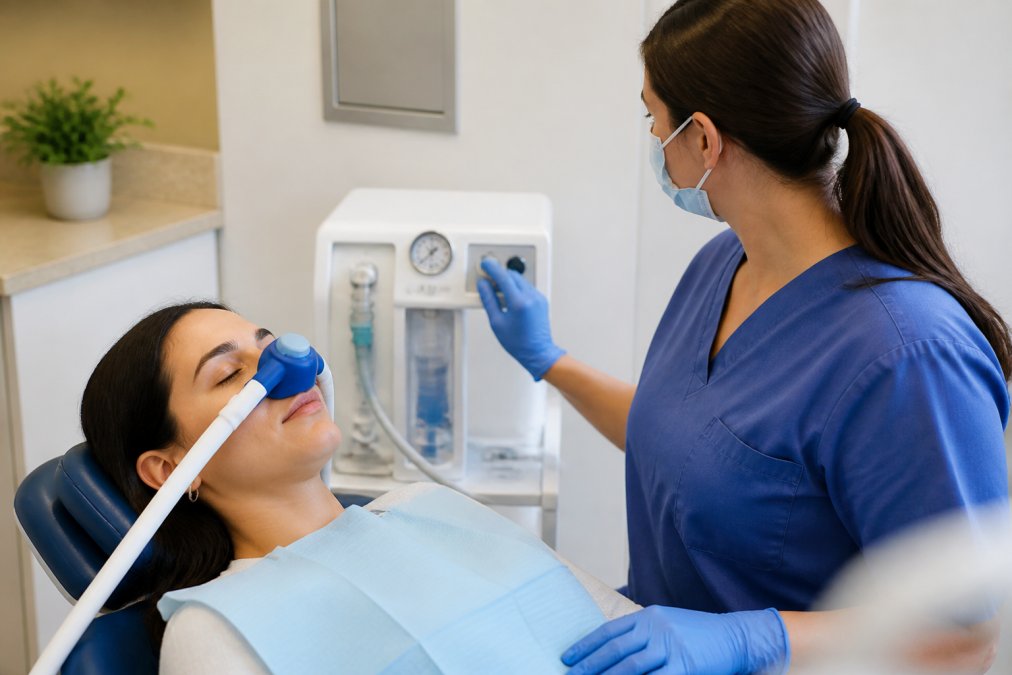
- Nitrous oxide (laughing gas): Inhaled through a small mask, this offers minimal sedation. You stay fully awake and can talk, but you feel a gentle sense of relaxation that wears off within minutes.
- Oral sedation: A sedative pill taken before your appointment. Depending on the dose, this produces minimal to moderate sedation. You remain conscious but feel drowsy and less concerned about what is happening.
- Intravenous (IV) sedation: Delivered directly into the bloodstream for moderate to deep sedation. You stay aware enough to respond but often have little memory of the procedure itself.
- General anesthesia: Used only for the most complex cases, this puts you in a fully controlled state of unconsciousness managed by a specialized provider.

| Sedation Type | Level | Awareness | Best Use Case |
|---|---|---|---|
| Nitrous oxide | Minimal | Fully awake and responsive | Routine cleanings, mild anxiety |
| Oral sedation | Minimal to moderate | Drowsy but conscious | Longer procedures, moderate anxiety |
| IV sedation | Moderate to deep | Sleepy, limited memory | Complex work, severe dental phobia |
| General anesthesia | Deep | Unconscious | Extensive surgery, special needs |
The distinction matters because it determines monitoring needs. With nitrous oxide, you can drive yourself home shortly after. With oral or IV sedation, you will need someone to accompany you, as your reflexes and judgment remain affected for hours afterward.
Who Is a Candidate for Dental Sedation?
Sedation is not reserved for people with severe phobia. You may be a candidate if you have a sensitive gag reflex, difficulty numbing with local anesthesia alone, or a long, complex procedure. Patients with physical conditions that make sitting still uncomfortable also benefit from sedation's reduced time perception.
Candidacy is equally about your medical profile. The screening process determines not only whether sedation is appropriate, but which level is safe for you.
Medical Conditions That Require Special Consideration
Certain conditions affect how your body metabolizes sedatives or how your airways respond during deeper sedation. These do not automatically disqualify you, but they require specific adjustments or clearance from your primary care provider.
- Sleep apnea: Sedatives relax the muscles of the upper airway, which can worsen breathing obstruction during sleep (peer-reviewed research). If you use a CPAP machine, bring it to your appointment or discuss whether lighter sedation levels are safer.
- Obesity (BMI over 30): Excess weight can affect drug distribution and increase the risk of airway collapse during deeper sedation. Your dentist may adjust the dosage or recommend a lighter level.
- Heart conditions (arrhythmias, coronary artery disease, uncontrolled hypertension): Some sedative agents can cause fluctuations in heart rate and blood pressure. Your dentist needs to know your current medications and whether your condition is stable.
- Respiratory conditions (asthma, COPD): Sedatives can depress respiratory drive. If you use an inhaler, bring it to your appointment and inform the team.
- Kidney or liver disease: These organs clear sedative medications from your body. Impaired function means the drug may last longer or reach higher concentrations than intended.
- Pregnancy: Most dentists avoid elective sedation during pregnancy, especially in the first trimester (the American Dental Association). If you are pregnant or suspect you may be, disclose this before any sedation is planned.
- Neurological conditions (epilepsy, Parkinson's disease): Certain sedatives can interact with anti-seizure or movement disorder medications.
Medication Interactions You Must Disclose
A complete list of your current medications, including over-the-counter drugs, supplements, and herbal remedies, is essential. Common interactions include:
- Benzodiazepines or sleep aids: Taking these alongside oral sedation can cause excessive drowsiness or respiratory depression
- Opioid pain medications: These compound the respiratory depressant effects of deeper sedation
- MAO inhibitors or certain antidepressants: These can cause dangerous blood pressure spikes when combined with some sedative agents
- Blood thinners: While not a direct sedation interaction, these affect bleeding risk during the dental procedure itself
- St. John's Wort and valerian root: These herbal supplements can alter how sedatives are metabolized
The Screening Process: What to Expect
Your dentist will not simply ask "Are you healthy?" and proceed. A proper screening includes:
- Medical history questionnaire covering the conditions listed above
- Vital sign measurement including blood pressure, heart rate, and oxygen saturation
- Medication reconciliation comparing your list against known sedative interactions
- Airway assessment to evaluate factors like neck circumference, tongue size, and jaw mobility that predict how easily you can breathe during deeper sedation
- Consultation with your primary care physician if you have unstable medical conditions, your dentist may request written clearance before proceeding
Pediatric vs. Adult Considerations
Children are not simply smaller adults when it comes to sedation. Their metabolic rates are higher, their airways are anatomically different, and they may not articulate how they are feeling. Pediatric sedation requires specialized training and often uses different medication protocols.
A family-focused clinic will assess each child individually, considering:
- Age and weight to calculate appropriate dosages
- Developmental level to determine whether behavioral guidance techniques might suffice
- Medical history including any history of adverse reactions to medications
- Procedure type and duration to match the appropriate sedation depth
For young children, many dentists prefer nitrous oxide or light oral sedation as a first step before considering deeper levels. The goal is always to use the lightest effective sedation.
What Disqualifies You (Temporarily or Permanently)
Some situations require postponing sedation rather than avoiding it entirely:
- Recent heavy meal (within 6 hours for deeper sedation levels)
- Active respiratory infection such as a cold or flu, which increases airway reactivity
- Acute illness or fever
- Recent alcohol or recreational drug use, which can unpredictably interact with sedatives
- Uncontrolled medical conditions that have not been stabilized
Being honest during screening ensures the sedation actually works. If your dentist does not know about a condition affecting drug metabolism, you may be under-sedated or over-sedated. The screening protects both your comfort and safety.
Safety of Dental Sedation: What to Expect
Sedation dentistry is widely practiced, and serious complications are rare when protocols are followed correctly. That safety record depends on patient monitoring. Throughout your procedure, a trained team tracks your vital signs, adjusting sedation depth continuously.
"Conscious sedation" describes a state where you remain responsive, you can breathe on your own and respond to gentle prompts, but feel detached from the procedure. This is distinct from general anesthesia, which requires airway management and a dedicated anesthesia provider.
Preparation is critical. You will receive specific instructions before your appointment, typically including fasting requirements for deeper sedation levels. Following these instructions is not optional, a full stomach during moderate or deep sedation increases complication risk significantly.
Recovery Time After Dental Sedation
Recovery depends almost entirely on the sedation method used, not the dental procedure itself. Understanding the specific windows for each level is essential for planning your day, transportation, and return to normal responsibilities.
Minimal Sedation (Nitrous Oxide)
The effects of nitrous oxide dissipate within minutes of stopping the gas (PubMed). Most patients feel fully alert within 5 to 10 minutes and can drive themselves home, with no lingering restrictions. This is the only sedation level where independent discharge is typically permitted.
Moderate Sedation (Oral or IV)
Oral and IV sedation produce a longer recovery curve. While the procedure may take one hour, the sedative effects persist for several hours afterward, typically drowsiness for 4 to 6 hours, with residual grogginess or impaired judgment lasting up to 24 hours.
Because your reflexes and decision-making are compromised, you cannot drive, operate machinery, or sign legal documents for at least 24 hours. You must arrange for a responsible adult to:
- Drive you to and from the appointment
- Stay with you for the first 4 to 6 hours after you return home
- Help you manage any post-operative instructions, as your memory of the discharge conversation may be hazy
If you cannot secure a chaperone, most clinics will reschedule your sedation appointment, this is standard safety protocol. Do not rely on ride-sharing services alone, as the driver cannot accompany you into the clinic or be responsible for you after discharge.
Deep Sedation and General Anesthesia
For deep sedation or general anesthesia, recovery is more prolonged. You may feel disoriented, nauseous, or unsteady for 8 to 12 hours. Full cognitive recovery often takes a full day. Plan to take the next day off work if your job involves driving, operating equipment, or making complex decisions. For physically demanding jobs, allow 24 to 48 hours before returning to full duties.
Return-to-Work Timeline at a Glance
| Sedation Level | Drive Yourself Home? | Return to Desk Work | Return to Physical Work |
|---|---|---|---|
| Nitrous oxide | Yes, immediately | Same day | Same day |
| Oral sedation | No, wait 24 hours | Next day | 24-48 hours |
| IV sedation | No, wait 24 hours | Next day | 24-48 hours |
| General anesthesia | No, wait 24 hours | 1-2 days | 2-3 days |
What to Prepare Before Your Appointment
To make recovery smoother, prepare before you arrive:
- Arrange your ride in advance and confirm the person can stay with you for several hours
- Stock soft foods such as yogurt, soup, and smoothies, as chewing may be difficult depending on the dental work
- Fill any prescriptions for pain medication before your appointment, not after
- Clear your schedule for the remainder of the day, do not plan meetings, childcare duties, or important calls
- Have a comfortable recovery spot ready with pillows and a blanket, as you may want to sleep off the residual effects
A common mistake is assuming that because you feel fine, you can resume normal activities. The medication wears off on a biological timeline, not based on how you feel. Respect that timeline, and your recovery will be uneventful.
How to Decide If Dental Sedation Is Right Choice
To decide if dental sedation is right for you, weigh three factors: your level of anxiety, the complexity of the procedure, and your medical history. If you avoid the dentist because of anxiety or phobia, sedation can make the difference between neglecting your oral health and staying on top of it. If you have a long treatment plan, sedation can consolidate multiple stressful visits into fewer, calmer ones.
Financial and insurance coverage is a practical consideration many patients overlook. Sedation is often billed separately from the dental procedure, and coverage varies widely between plans. Dental insurance in Canada typically covers the procedure but may not cover the sedation component in full. Contact your provider to understand your benefits before committing.
A consultation is the only reliable way to get a definitive answer. Your dentist will review your specific needs, explain which sedation level is appropriate, and outline what your appointment will look like from arrival to discharge. This is also your opportunity to ask about pediatric considerations if the treatment is for your child.
Conclusion
Sedation dentistry removes the barrier that anxiety creates between you and essential oral health care. Whether you need help managing a strong gag reflex, a complex procedure, or years of dental phobia, the right sedation level can make treatment comfortable and efficient. The decision requires an honest conversation with a qualified professional who can assess your medical history and match the approach to your needs.
At ALLDENT Family Dental, we understand that every patient arrives with a different level of comfort. Our team combines personalized treatment plans with modern digital technology to ensure precise, comfortable care for the whole family. If you have been postponing dental work because of anxiety, we invite you to discuss sedation options during a consultation and experience a calmer approach to your oral health.
Frequently Asked Questions
Can you choose to be sedated at the dentist?
Yes, you can request sedation, but the final decision is made with your dentist after reviewing your medical history, the type of procedure, and your anxiety level. During a consultation, your dentist will assess which level of sedation, from nitrous oxide to IV sedation, is appropriate. This is not a decision to self-diagnose; a clinical assessment by a qualified professional determines the safest approach for your specific situation.
Is dental sedation worth it for routine procedures?
For simple cleanings, sedation is often unnecessary, but it can be worth it if dental anxiety or a strong gag reflex prevents you from getting regular care. For procedures like fillings or extractions, oral or nitrous oxide sedation helps you stay relaxed while remaining responsive. If avoiding the dentist has led to declining oral health, sedation can make routine visits manageable and help you maintain a consistent treatment plan.
What is the safest sedation for dental work?
The safest option depends on your medical history, the procedure length, and your anxiety level. Nitrous oxide, or laughing gas, is the mildest form and allows you to recover quickly. For more involved treatments, oral or IV sedation may be recommended, but these require closer patient monitoring. Your dentist will choose the lowest effective level to ensure patient safety while keeping you comfortable throughout the procedure.
What are the potential downsides of oral sedation?
Oral sedation can make you drowsy for several hours, so you will need someone to drive you home. Some people feel groggy or have temporary nausea afterward. It also takes longer to wear off than nitrous oxide. Your dentist will provide post-operative instructions and recovery guidelines to manage these effects. Discussing your full medical history beforehand helps avoid complications and ensures the sedation protocol is tailored to you.
Book an appointment with ALLDENT Family Dental and find out how a personalized sedation plan can make your next visit a comfortable one.
This article was written using GrandRanker