 ultimate-guide
The Importance of Routine Dental Hygiene: A 2026 Guide
Table of Contents
- What Routine Dental Hygiene Actually Does for Your Body
- The Link Between Oral Health and Systemic Disease
- Benefits of Professional Dental Cleaning Beyond a Brighter Smile
- Dental Hygiene Best Practices You Can Start Tonight
- The Cost of Skipping Care: Preventative vs. Restorative Dentistry
- Dental Anxiety and the Psychological Side of Keeping a Routine
- How Modern Home Care Technology Changes the Routine
- Conclusion
- Frequently Asked Questions
Last Updated: September 14, 2026
What Routine Dental Hygiene Actually Does for Your Body
Routine dental hygiene is the daily practice of removing plaque and food debris from teeth and gums through brushing, interdental cleaning, and regular professional care. It is the single most reliable way to prevent tooth decay, gum disease, and tooth loss before they start. At ALLDENT Family Dental, we see the difference this habit makes across every age group, from toddlers learning to hold a brush to seniors protecting decades of dental work. Below, we explain what routine dental hygiene does for your whole body, not just your smile.
The problem is that oral care feels optional until something hurts. A cavity rarely announces itself in week one. It builds quietly under enamel for months, and by the time you feel it, the fix is no longer a cleaning.
How Plaque and Bacteria Build Up Between Visits
Plaque is a sticky bacterial biofilm that forms on teeth within hours of brushing. If it is not removed, minerals in saliva harden it into tartar, also called dental calculus, which no toothbrush can shift (Gum Disease FAQs). Tartar along the gumline traps more bacteria, inflames the gums, and sets the stage for gingivitis and eventually periodontal disease. A common mistake is brushing only the visible front surfaces and skipping the gumline, which is exactly where bacterial biofilm does the most damage.
The Link Between Oral Health and Systemic Disease
The link between oral health and systemic disease is well documented: chronic gum inflammation does not stay confined to your mouth. When periodontal tissue is infected, the gum lining becomes more permeable, and everyday actions like chewing or brushing can push oral bacteria into the bloodstream. From there, two mechanisms do the damage. The first is direct: bacteria and their byproducts travel through the circulation and can attach to damaged tissue elsewhere, including the lining of blood vessels and heart valves. The second is indirect and probably more important: the persistent inflammatory response your immune system mounts against gum infection keeps circulating inflammatory markers elevated, and that low-grade systemic inflammation is what researchers associate with a growing list of conditions.
Inflammation, Cardiovascular Health, and Blood Sugar
Gum disease is an inflammatory condition, and the conditions most consistently studied alongside it include cardiovascular disease, type 2 diabetes, respiratory infections, and adverse pregnancy outcomes such as preterm birth and low birth weight. In cardiovascular research, oral bacteria have been found in atherosclerotic plaque, the fatty deposits that narrow arteries, though finding bacteria there does not by itself prove they caused the blockage (pubmed.ncbi.nlm.nih.gov). What is clearer is the inflammation pathway: people with periodontitis tend to show higher levels of C-reactive protein and other inflammatory markers, and treating the gum disease tends to lower them.
The diabetes relationship runs in both directions and is the best understood of the group. Elevated blood sugar damages blood vessels in the gums and gives bacteria more fuel, so people with poorly controlled diabetes develop gum disease more often and more severely. In return, active gum infection makes blood sugar harder to control, which is why some patients see their A1C improve after periodontal treatment. This is also why your dentist asks about your medical history and medications, and why a bleeding gumline is worth mentioning rather than ignoring.
Other groups warrant extra attention. Pregnancy changes gum tissue and raises the risk of pregnancy gingivitis, so routine care matters more, not less, during those months. People who smoke, use certain medications that reduce saliva, or have a suppressed immune system face compounded risk. None of this means a cleaning replaces a visit to your physician. It means your mouth is part of the picture, not separate from it. Canadian Dental Association oral health resources offers patient guidance on this connection.
Benefits of Professional Dental Cleaning Beyond a Brighter Smile
The benefits of professional dental cleaning go well beyond appearance. A hygienist removes plaque and tartar from areas your brush cannot reach, measures gum pocket depths, and screens for early decay and oral tissue changes. Scaling removes deposits above and just below the gumline; root planing smooths rough root surfaces when gum disease has progressed. Your dentist also checks existing restorations, since a failing filling or crown is far cheaper to address early than after it fractures.
For children, these visits build familiarity and catch problems while teeth are still developing. For adults, they are where early gum recession and enamel wear get noticed. For anxious patients, a calm, unhurried appointment is often what makes the routine stick at all.
Dental Hygiene Best Practices You Can Start Tonight
Start with the two-minute brush, twice a day, plus once-daily interdental cleaning. That is the core of every dental hygiene routine that works. Everything else, mouthwash, whitening, specialty pastes, is an add-on, not a substitute. What most guides skip is the why behind each step and the modern tools that make the routine easier to actually keep.
Brushing Technique, Flossing, and Interdental Cleaning
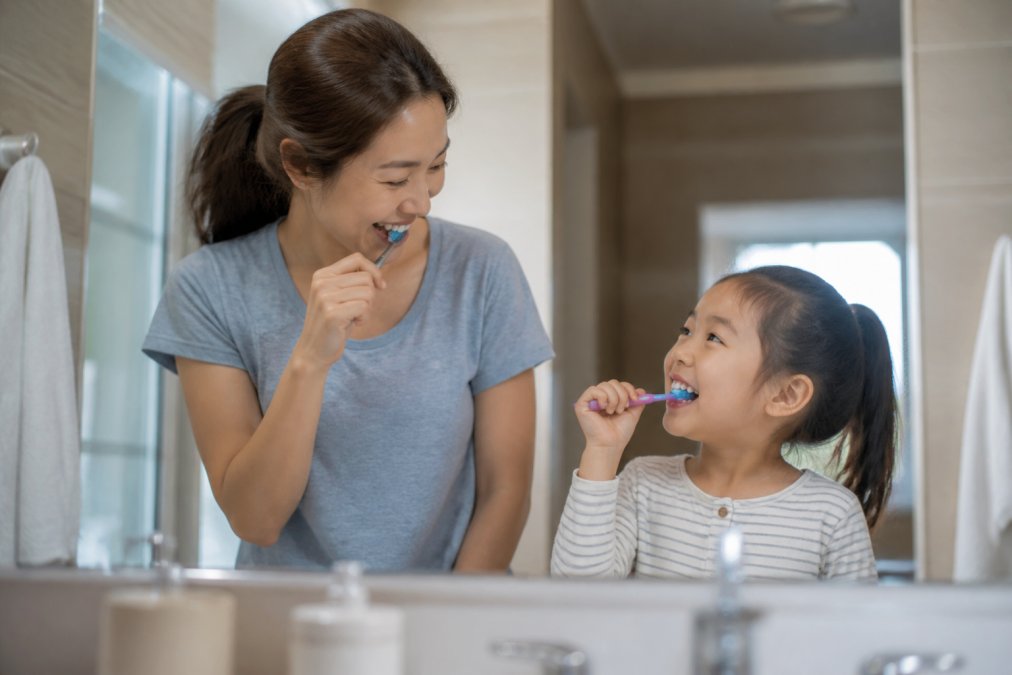
- Angle the brush at 45 degrees toward the gumline and use short, gentle strokes. The angle is what lets bristles sweep plaque out of the sulcus, the shallow groove where the gum meets the tooth, which is where gum disease begins.
- Cover every surface: outer, inner, and chewing surfaces, plus the back of the last molar.
- Use fluoride toothpaste and spit rather than rinse, so fluoride stays on the enamel. Rinsing with water immediately after brushing washes away the fluoride that does the remineralizing work.
- Clean between teeth daily with floss, interdental brushes, or a water flosser. A toothbrush cannot reach roughly a third of each tooth's surface, and that is exactly where cavities and gum inflammation start.
- Replace your brush every three to four months, or sooner if bristles splay. A worn brush cleans less and can irritate gums.
What most guides miss is that technique matters more than effort. Brushing hard with a worn brush damages enamel and irritates gums without cleaning better. If you are unsure whether your technique is working, ask your hygienist to watch you brush at your next visit.
The Dietary Angle Most Guides Skip
Your mouth hosts a living microbiome, and what you eat feeds it. Fermentable carbohydrates, the sugars and starches in bread, crackers, chips, and dried fruit, are the preferred fuel for cavity-causing bacteria, and they linger on teeth longer than most people assume. Frequency matters as much as quantity: sipping a sweet drink over an afternoon keeps acid attacks going, while the same sugar eaten with a meal does less damage because saliva neutralizes the acid afterward.
Some foods actively help. Cheese and plain yogurt raise the pH in your mouth and provide calcium and phosphate that support remineralization. Crunchy vegetables and fibrous fruit stimulate saliva, your natural buffer. Drinking water, especially fluoridated water where available, rinses debris and keeps saliva flowing. A practical habit is to finish a meal with water or a piece of cheese rather than a sweet, and to keep sugary and acidic drinks to mealtimes rather than sipping them all day.
Modern Home Care Tools Worth Knowing
Home care technology has closed much of the gap between what you can do at home and what happens in the chair. Electric toothbrushes with pressure sensors and timers take the guesswork out of brushing; several now connect to an app that flags the spots you consistently miss. Water flossers help people who struggle with string floss, particularly around braces, crowns, and bridges. Interdental brushes in the right size often clean between teeth more effectively than floss, especially where gums have receded. Smart mirrors and coaching apps are newer, and their long-term value is still being studied, but the underlying principle is sound: feedback improves technique.
Professional technology has moved too. Digital imaging and intraoral scanners let your dentist show you what they see on a screen, which makes a diagnosis easier to understand and a treatment plan easier to accept. For anxious patients, seeing the problem before it is treated removes a lot of the unknown.
The Cost of Skipping Care: Preventative vs. Restorative Dentistry
Preventative dentistry is consistently less expensive than restorative work, and the gap widens the longer a problem goes unaddressed. A small cavity may need a simple filling; left alone, it can reach the nerve and require a root canal and crown. Untreated gum disease can progress to tooth loss, which then involves replacement options. Few people plan for that expense, and fewer enjoy it.
Pricing for any treatment depends on your individual situation, your insurance coverage, and the materials involved. Rather than quote figures that may not apply to you, we recommend asking your dental office for a written treatment plan and a benefits breakdown before you commit. If cost is the barrier keeping you from routine dental hygiene, say so at the front desk. Many practices, including ours, will walk you through options.
Dental Anxiety and the Psychological Side of Keeping a Routine
Dental anxiety is one of the most common reasons people skip appointments, and it is rarely about the teeth. It is about loss of control, past bad experiences, or fear of being judged for how long it has been. That fear compounds: the longer you avoid care, the more you assume there is something to be embarrassed about. In practice, the opposite is usually true. Hygienists see neglected teeth every day and are trained to help, not lecture.
If anxiety has kept you away, say so when you book. Ask for a morning appointment if waiting all day makes it worse. Agree on a hand signal to pause. At ALLDENT Family Dental, we built our practice around nervous patients for exactly this reason: a calm environment, clear explanations, and no pressure to do everything in one visit. Restoring a routine is easier when the first appointment is small.
How Modern Home Care Technology Changes the Routine
Home care technology has closed much of the gap between what you can do at home and what happens in the chair. Electric toothbrushes with pressure sensors and timers take the guesswork out of brushing; several now connect to an app that flags the spots you consistently miss. Water flossers help people who struggle with string floss, particularly around braces, crowns, and bridges. Smart mirrors and coaching apps are newer, and their long-term value is still being studied, but the underlying principle is sound: feedback improves technique.
Professional technology has moved too. Digital imaging and intraoral scanners let your dentist show you what they see on a screen, which makes a diagnosis easier to understand and a treatment plan easier to accept. For anxious patients, seeing the problem before it is treated removes a lot of the unknown.
Conclusion
Skipping the routine is easy, and the consequences arrive quietly, then all at once. A twice-daily brush, daily interdental cleaning, and regular professional visits remain the most effective combination for protecting your teeth and your overall health. If it has been a while, or if anxiety has kept you away, ALLDENT Family Dental offers personalized treatment plans, digital imaging for precise diagnosis, and a calm, family-friendly environment for children, adults, and seniors. Same-day emergency care is available when something cannot wait. Book Appointment with ALLDENT Family Dental and get your family's oral health back on schedule.
Frequently Asked Questions
Why is routine dental hygiene important for overall health?
Routine dental hygiene does more than protect your teeth. Regular brushing, flossing, and professional cleanings manage the bacterial biofilm that causes plaque, tartar, and gingivitis. When gum inflammation goes untreated, it is linked to systemic health concerns, including cardiovascular conditions and difficulty managing blood sugar. Keeping a consistent routine also helps you avoid tooth decay, cavities, and eventual tooth loss, which affect how you eat, speak, and feel day to day. Think of it as preventative maintenance for your whole body, not just your smile.
What are the consequences of poor dental hygiene?
Skipping routine care allows plaque to harden into tartar, which only a dental professional can remove through scaling. From there, gingivitis can progress to periodontal disease, a leading cause of tooth loss in adults. Other consequences include halitosis, enamel erosion, cavities, and gum recession. Because oral inflammation is linked to systemic health, untreated problems can also complicate conditions like diabetes and heart disease. The longer issues go unaddressed, the more complex and costly treatment becomes.
How often should you visit a dentist for a professional cleaning?
Most people benefit from a dental checkup and professional cleaning every six months, though your dentist may recommend a different schedule based on your gum health, medical history, and risk factors. Those with periodontal disease or certain systemic conditions may need more frequent visits. A dental professional can assess your oral cavity, take digital imaging if needed, and tailor a preventative dentistry plan to your situation. Ask your dentist what interval makes sense for you.
What are the best practices for maintaining oral hygiene at home?
Brush twice daily for two minutes with a fluoride toothpaste, using a soft-bristled brush and gentle circular motions along the gumline. Floss or use interdental cleaning tools once a day to reach between teeth. Consider a mouthwash that suits your needs, but do not use it as a substitute for brushing and flossing. Limit sugary and acidic foods and drinks, and drink water after meals. Replace your toothbrush every three to four months, and book regular dental checkups to catch problems early.