 ultimate-guide
Benefits of Routine Dental Cleanings for Toddlers
Table of Contents
- Why Routine Dental Cleanings Matter for Toddlers
- Your Toddler's First Dental Visit: What to Expect
- Preventing Early Childhood Caries Through Regular Cleanings
- How Often Do Children Need Dental Checkups?
- The Role of Baby Teeth in Speech, Eating, and Development
- Managing Dental Anxiety in Toddlers
- Frequently Asked Questions
Last Updated: September 13, 2026
Why Routine Dental Cleanings Matter for Toddlers
Routine dental cleanings for toddlers are professional preventive appointments that remove plaque and tartar a toothbrush cannot reach, let a dentist catch problems while they are still small, and help a child learn that the dental chair is a safe place. For parents, they are the single most reliable way to stay ahead of tooth decay. This guide from ALLDENT Family Dental walks through what happens at a first visit, how often to book, and how to make the whole experience calmer for everyone.
The stakes are higher than most parents expect. Primary teeth have thinner enamel than permanent teeth, so decay can move from a small white spot to a cavity much faster. Once decay reaches the nerve, treatment becomes more involved and more expensive. Early childhood caries is one of the most common chronic conditions in young children, and it is largely preventable with early, consistent care.
Here is the part most parents get wrong: they wait until something looks wrong. By the time a toddler complains of pain or you spot a dark spot, the problem has usually been developing for months. Cleanings are how you catch it early, when the fix is simple.
Below, we cover the full picture: what to expect at the first visit, sensory-friendly strategies, diet and fluoride, how often to book, and how to handle a nervous toddler.
Your Toddler's First Dental Visit: What to Expect
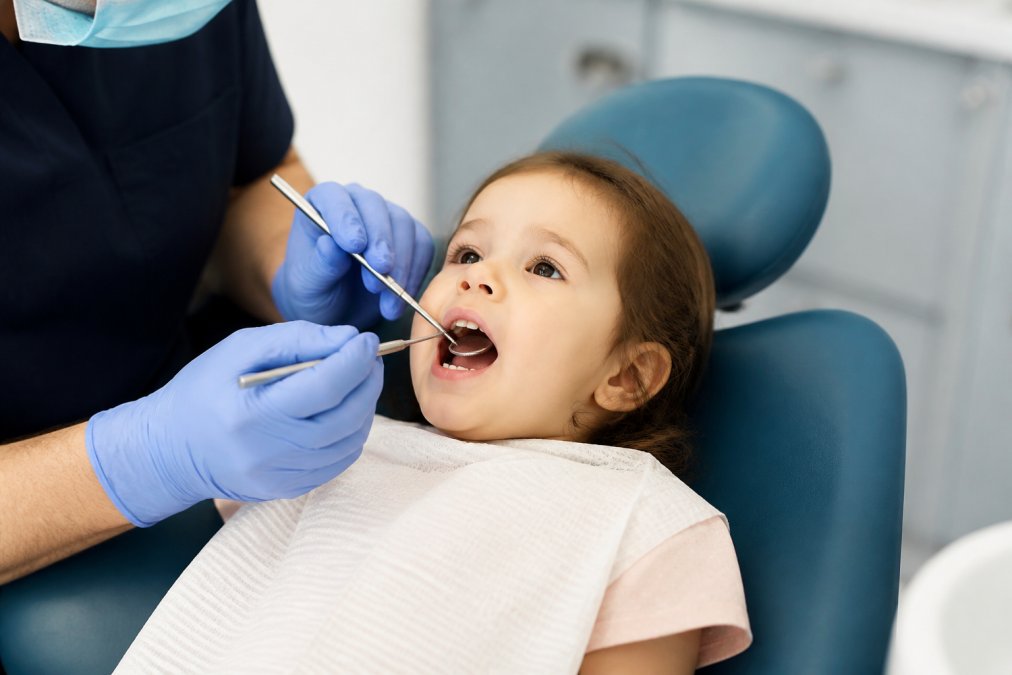
A first dental visit for a toddler is usually short, gentle, and more about familiarity than treatment. Most visits involve a lap exam, a look at the teeth and gums, a light cleaning if your child is comfortable, and a conversation about home care. Expect it to run 15 to 30 minutes, with the actual exam taking only a few minutes.
When to Schedule
Book the first appointment by your child's first birthday, or within six months of the first tooth appearing (cda-adc.ca). This timing is widely recommended by dental professionals because it establishes a dental home before problems start. A common pattern is that children who start early need less invasive treatment later, simply because problems are caught while they are small.
What Actually Happens, Step by Step
Knowing the sequence helps you narrate it to your child and stay calm yourself:
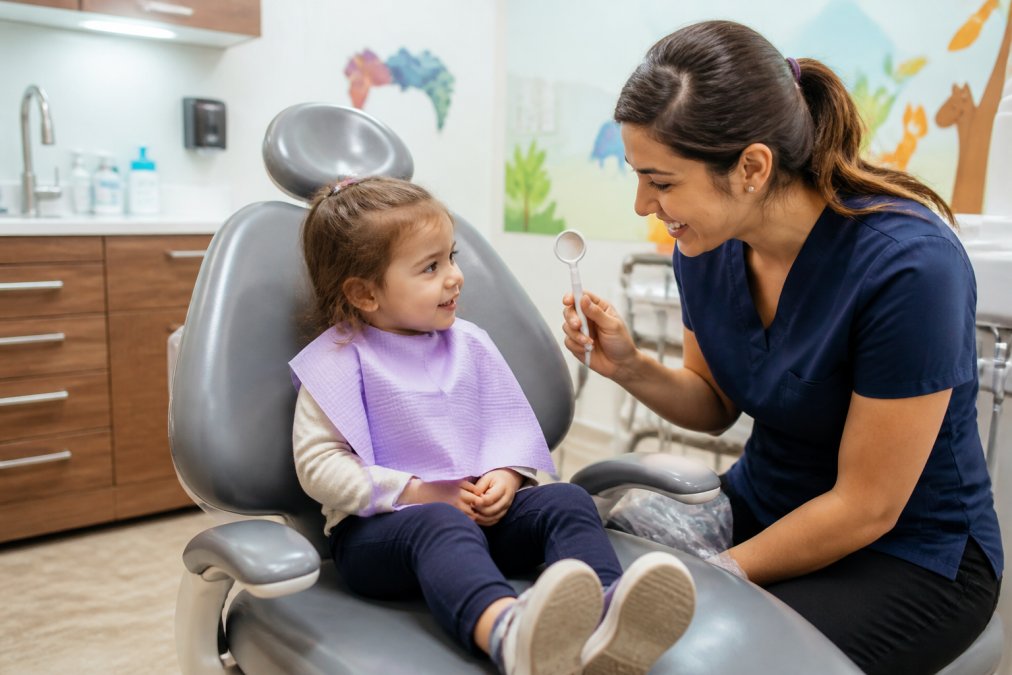
- Greeting and settling. The hygienist or dentist talks to your child first, often letting them hold a mirror or touch a gloved hand.
- Knee-to-knee or lap exam. For many toddlers, the parent sits in the chair and the child lies back with their head in the clinician's lap. This position is safe, quick, and lets the clinician see every surface.
- Counting and checking. The clinician counts teeth, checks the gums, looks for white spots (early decay), and examines how the teeth meet.
- Light cleaning. If your child is comfortable, a soft brush or a gentle scaler removes plaque and any tartar. This is often skipped entirely on a first visit if the child is upset, that is normal and not a failure.
- Fluoride varnish (if appropriate). A thin coating painted on the teeth, usually fruit-flavored, that strengthens enamel. Your dentist will decide based on cavity risk.
- Home-care conversation. You leave with specific brushing, diet, and fluoride guidance for your child's mouth.
Home-Prep Playbook
Preparation starts at home, ideally a few days before:
- Read a picture book about visiting the dentist two or three times
- Practice opening wide and counting teeth together in a mirror
- Role-play with a stuffed animal as the "patient"
- Watch a short, calm video of a child at the dentist
- Schedule for a time your child is usually rested, not near naptime
- Bring a comfort item, such as a small toy or blanket
- Skip sugary snacks right before the appointment
- Arrive a few minutes early so your child can settle
- Use neutral words, "counting teeth," not "drilling" or "needle"
Understanding the Cost
Cost is one of the biggest reasons parents delay a first visit, and it is worth understanding before you book. In most provinces, routine cleanings and exams for children are covered in part or in full through provincial health programs or public dental programs for eligible families, coverage varies widely by province and by household income. If you have private insurance through an employer, pediatric preventive care is typically covered at a high percentage, often 80 to 100 percent, with an annual maximum. If you are paying out of pocket, ask the clinic for a written estimate before the appointment; a toddler cleaning and exam is usually one of the least expensive dental visits you will ever pay for, and catching decay early almost always costs less than treating it later.
Sensory-Friendly Strategies for a Calmer Cleaning
Some toddlers are overwhelmed by bright lights, loud suction, or the sensation of instruments in the mouth. A few adjustments make a real difference.
Ask the clinic to dim the overhead light, demonstrate each instrument before using it, and let your child hold a mirror. A heavy or weighted lap pad can help a child who seeks deep pressure. Noise-reducing headphones soften the suction sound. If your child is sensitive to taste, request a non-flavored polish.
Preventing Early Childhood Caries Through Regular Cleanings
Preventing early childhood caries is the core purpose of routine cleanings. Professional cleanings remove dental plaque and tartar buildup from areas a toothbrush misses, which interrupts the decay process before it damages enamel.
Tartar, also called calculus, is hardened plaque that only a professional can remove. Left in place along the gumline, it irritates the gums and contributes to gingivitis. In toddlers, the most common trouble spots are the back molars and the upper front teeth, especially where a child falls asleep with a bottle.
During a cleaning, the dentist or hygienist also checks for early signs of decay, evaluates enamel health, and reviews how your child's teeth are coming in. That screening is often the first time a parent learns a cavity is starting.
Diet, Fluoride, and the Oral Microbiome
What your toddler eats and drinks shapes the bacteria in their mouth. The oral microbiome is the community of bacteria living on teeth and gums; frequent sugar exposure feeds the acid-producing types that cause decay.
Practical steps that help:
- Offer water between meals instead of juice or sweetened drinks
- Limit sticky snacks like dried fruit and gummies, which cling to teeth
- Avoid putting a child to bed with a bottle of anything but water
- Ask your dentist whether your child needs a fluoride treatment based on their individual risk
Fluoride treatment is a professional application that strengthens enamel and makes it more resistant to acid. Whether it is appropriate, and how often, depends on your child's cavity risk, water supply, and other factors. Your dentist can advise on this at the visit. For general guidance on children's oral health, see Canadian Dental Association oral health resources.
How Often Do Children Need Dental Checkups?
Most children need a dental examination and cleaning every six months (cda-adc.ca). The frequency of dental checkups for children can be adjusted if your child has a higher risk of decay, developmental concerns, or a history of cavities.
A child with active decay or ongoing enamel problems may be seen every three to four months until things stabilize. A child with healthy teeth, good home care, and low risk may stay on a six-month schedule. Your dentist will set the interval based on what they actually see, not a fixed rule.
| Risk Level | Typical Recall Interval | What Drives It |
|---|---|---|
| Low risk | Every 6 months | Healthy enamel, no cavities, good home care |
| Moderate risk | Every 4-6 months | Early white spots, frequent snacking |
| High risk | Every 3-4 months | Active decay, prior cavities, enamel defects |
The Role of Baby Teeth in Speech, Eating, and Development
Primary teeth do real work. They guide speech development, support chewing efficiency, and hold space for the permanent tooth development happening underneath the gums.
Toddlers use their front teeth to make sounds like "th" and "s." Missing or damaged front teeth can affect how those sounds form. Back teeth do the grinding, so a child with pain may avoid harder foods and miss out on variety.
Baby teeth also act as placeholders. If a primary tooth is lost too early to decay, the teeth beside it can drift into the gap, leaving no room for the permanent tooth to come through properly. That can mean crowding and orthodontic treatment later. Protecting primary teeth is protecting the adult smile underneath.
Managing Dental Anxiety in Toddlers
Dental anxiety in toddlers is common and usually learned from a first experience that felt rushed or frightening. The good news is that it responds well to preparation and a calm, unhurried approach. What most guides miss is that anxiety in toddlers is not one thing, it is a mix of fear of the unknown, sensory overload, and mirroring the parent's own stress. Each one needs a different response.
Match the Strategy to the Cause
- Fear of the unknown: Use repetition and predictability. Read the same dentist book several times, watch the same short video, and rehearse the same steps at home. Familiarity is the antidote.
- Sensory overload: Reduce input before you arrive. Ask for a quiet time slot, bring noise-reducing headphones, request a non-flavored polish, and let the child hold a comfort object throughout.
- Mirrored anxiety: Manage your own nervous system first. Children read parent tension in tone and posture long before they understand words. Slow your breathing, keep your voice low, and avoid over-explaining.
A Sensory-Friendly Visit, Step by Step
For a child with sensory processing sensitivities, including many autistic children and children with ADHD, a standard cleaning can be genuinely overwhelming. A few concrete adjustments help:
- Request the first appointment of the day, when the office is quietest
- Ask the clinician to dim the overhead light and use a small flashlight instead
- Have each instrument shown and touched before it is used
- Offer a weighted lap pad or a favorite blanket for deep-pressure input
- Use noise-reducing headphones during suction
- Ask for a break signal your child can use, a raised hand, a squeeze, a word
- Keep the door closed to reduce hallway noise
What Helps Most
- Start early, so the first visits are simple and positive
- Use neutral words. Say "counting teeth" rather than "drilling" or "needle"
- Let your child watch you get a checkup first
- Keep your own tone relaxed, since children read parent anxiety quickly
- Choose a clinic that regularly treats young children
- Never schedule a cleaning during naptime or right after a long day
- Reward the effort, not just the outcome, praise sitting in the chair even if the cleaning did not happen
For children with significant dental phobia, a slow introduction with a short "meet the dentist" visit before any treatment can build trust. Some clinics offer this as a separate, low-pressure appointment, sometimes called a familiarization visit. It costs little or nothing and can prevent years of dread.
At ALLDENT Family Dental, we see nervous young patients regularly and build visits around comfort and pace.
Frequently Asked Questions
Do 2 year olds get dental cleanings?
Yes, children can have a professional cleaning as soon as their first tooth appears, usually around 6 months, and no later than their first birthday. At age 2, a gentle cleaning removes plaque and tartar that brushing may miss. The appointment also lets the dentist check for early signs of decay and give you tips on brushing and flossing. Many toddlers handle the visit well when it is kept short and positive.
At what age should a toddler have their first professional dental cleaning?
The first dental visit should happen by the first birthday or within six months of the first tooth coming in. This initial visit often focuses on familiarization, a brief examination, and parent education rather than a full cleaning. A professional cleaning may be introduced gradually depending on your child's comfort and the dentist's assessment. Early visits help build a positive relationship with the dental team.
How do routine cleanings help prevent early childhood caries?
Routine cleanings remove dental plaque and tartar buildup that can lead to early childhood caries. The dentist can also apply fluoride treatment to strengthen enamel and spot problem areas before they become cavities. Combined with home care like brushing twice daily and limiting sugary drinks, these visits significantly lower the risk of tooth decay. Early intervention can save your child from pain and more complex treatment later.
How often should children have dental checkups?
Most children should see a dentist every six months for a checkup and cleaning. However, the frequency of dental checkups for children can vary based on individual risk factors such as diet, oral hygiene habits, and history of decay. Your dentist may recommend more frequent visits if your child is at higher risk for cavities. Consistent checkups help maintain oral health and catch issues early.