 comparison
Emergency Dental vs Hospital ER: When to Go Where
Table of Contents
- What Constitutes a Dental Emergency
- Emergency Dental vs Hospital ER: Quick Comparison
- Signs of a Dental Abscess and Other Life-Threatening Conditions
- Emergency Dental Care Cost vs Hospital: What You'll Pay
- What to Do While Waiting for Professional Care
- Post-ER Follow-Up: Why You Still Need a Dentist
- Conclusion
Last Updated: August 30, 2026
What Constitutes a Dental Emergency
A dental emergency is any condition involving your mouth, teeth, or jaw requiring immediate professional attention to stop bleeding, relieve severe pain, or save a tooth. Emergencies demand care within hours, not days. Common examples include knocked-out teeth, severe uncontrolled bleeding, facial swelling affecting breathing or swallowing, severe trauma, and abscesses with signs of spreading infection.
Not every dental problem is an emergency. A chipped tooth without pain, mild sensitivity, or a small cavity can wait for a regular appointment. But when pain disrupts sleep or you notice facial or neck swelling, you're facing a genuine emergency. Understanding this distinction determines where you go and how quickly you'll get relief.
Emergency Dental vs Hospital ER: Quick Comparison
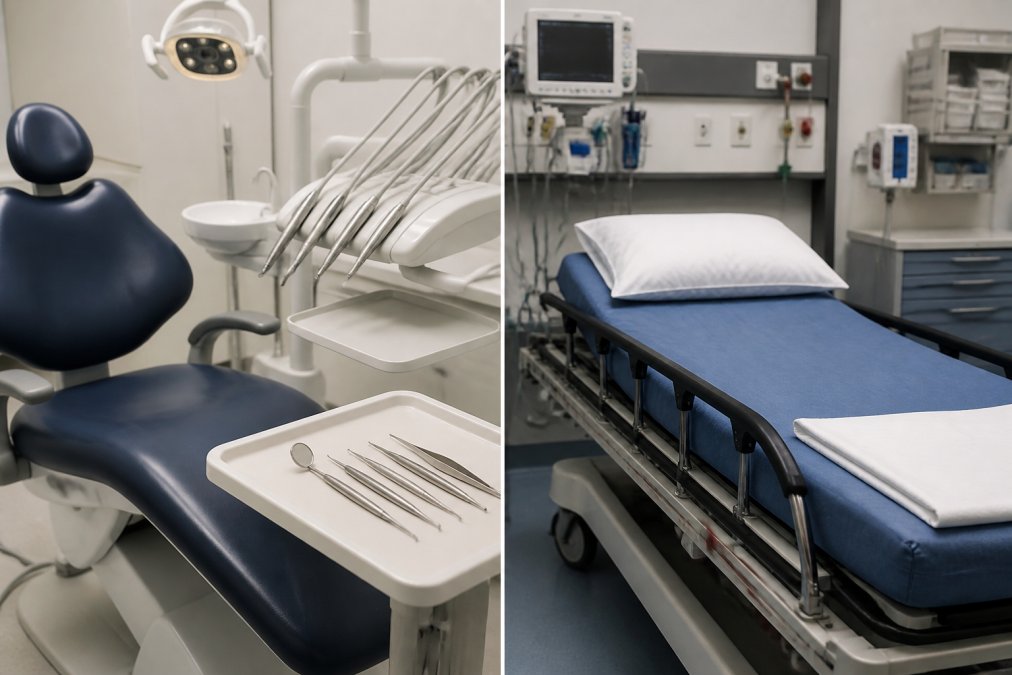
The choice between an emergency dental clinic and a hospital emergency room depends on your condition and what each facility handles. Use this triage framework to decide where to go.
Quick Triage Decision Tree
Do you have any of these warning signs?
- Difficulty breathing or swallowing
- Facial swelling visibly worsening over minutes to hours
- Fever (38.5°C or higher) combined with facial swelling or jaw pain (the CDC)
- Confusion, disorientation, or severe dizziness
- Swelling extending from your mouth to your neck or collarbone
- Suspected jaw fracture (severe pain on opening mouth, teeth not aligning normally)
- Injury involving your eye or head with concurrent mouth trauma
If YES: Go to the hospital emergency room immediately or call 911. These signs indicate potential airway compromise, spreading infection, or serious trauma requiring ER imaging, anesthesia, and surgical teams.
If NO: Continue to the next question.
Do you have severe pain, bleeding, or trauma to your teeth or mouth?
Examples: severe throbbing pain disrupting sleep, knocked-out tooth, broken or chipped tooth, uncontrolled bleeding (not stopping after 15 minutes of pressure), visible gum swelling around one tooth, or mouth trauma from falls or accidents.
If YES: Go to an emergency dental clinic. These require specialized treatment (root canal, extraction, replantation, suturing, or abscess drainage).
If NO: Continue to the next question.
Is it after hours with mild-to-moderate tooth pain and no other symptoms?
Examples: sensitivity to hot or cold, mild throbbing not preventing sleep, slight non-spreading gum swelling, or broken tooth without severe pain.
If YES: Call an emergency dental clinic to check availability. Many operate 24/7 or have extended hours. If unavailable, use temporary relief (over-the-counter pain reliever, cold compress) and schedule a regular appointment for the next business day. Do not go to the ER for mild pain.
If unsure: Call an emergency dental clinic and describe your symptoms. Most offer phone triage to advise whether you need immediate care.
When to Choose an Emergency Dental Clinic
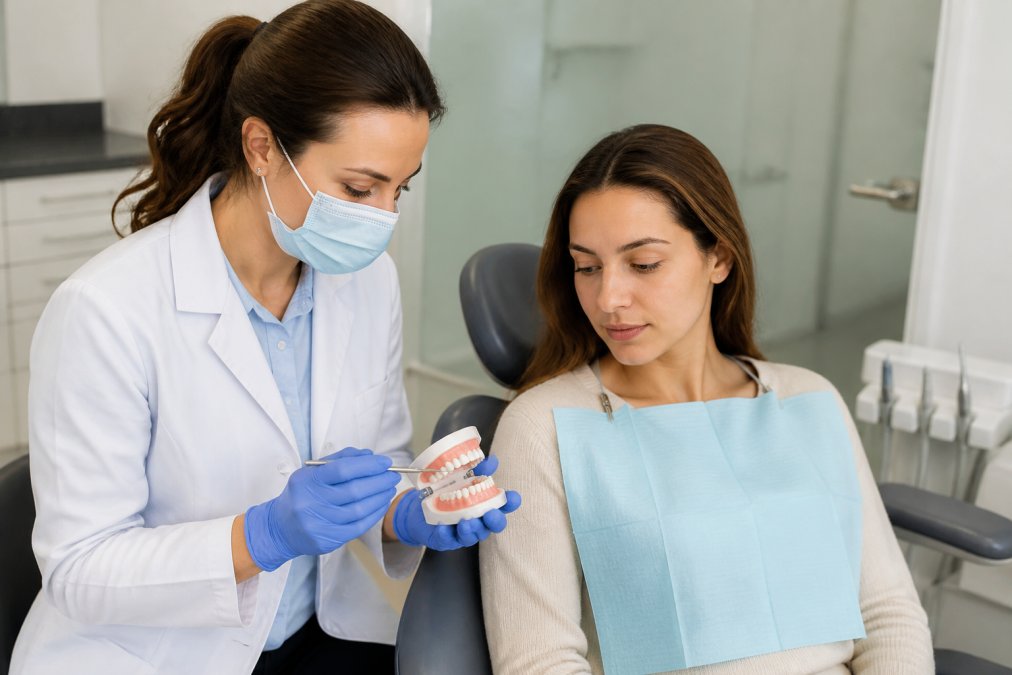
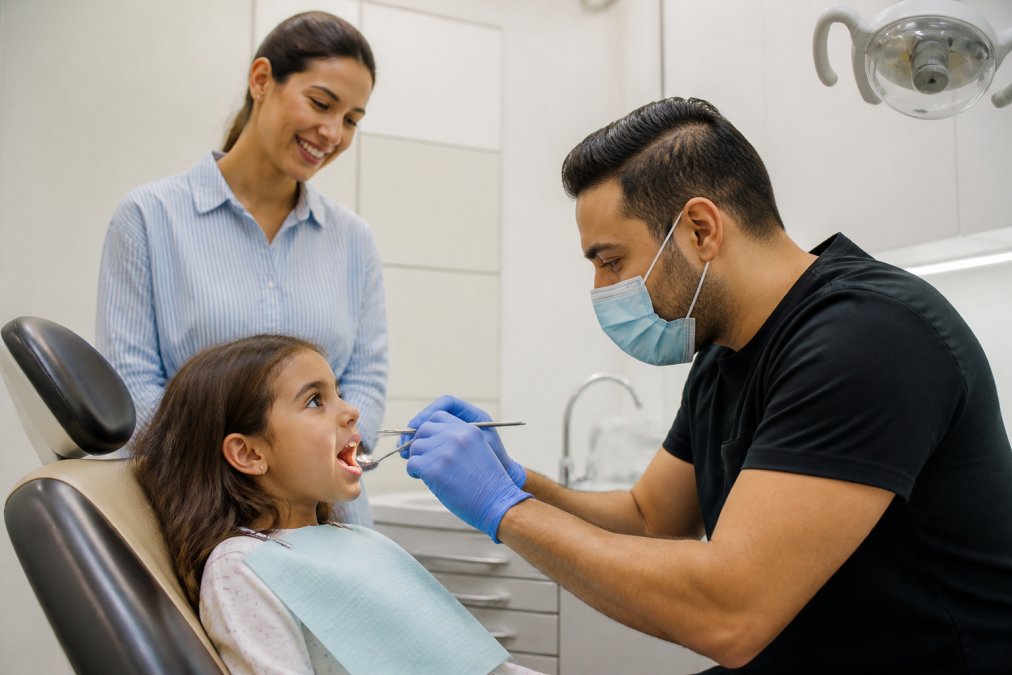
An emergency dental clinic is the right choice for most urgent dental problems: severe tooth pain, knocked-out teeth, broken teeth, uncontrolled bleeding, or signs of dental abscess. These clinics have tools and expertise to perform root canals, extractions, temporary restorations, and suturing.
When to Choose the Hospital Emergency Room
The hospital emergency room is appropriate when your condition threatens your airway, breathing, or systemic health. Severe facial trauma with possible jaw fractures, swelling closing off your airway, spreading infection with fever and chills, or injuries involving the eyes or brain require hospital care. The ER has CT scans, anesthesia teams, and surgical specialists. However, the ER cannot perform root canals, extractions, or detailed oral surgery and will refer you to a dentist anyway.
Quick Reference Table
| Condition | Best Choice | Why |
|---|---|---|
| Severe toothache or pulp pain | Emergency dental clinic | Fast diagnosis and root canal or extraction |
| Knocked-out tooth | Emergency dental clinic | Time-sensitive; needs replantation within hours |
| Uncontrolled bleeding from mouth | Emergency dental clinic | Dentist can identify source and apply pressure/sutures |
| Broken or chipped tooth | Emergency dental clinic | Can be restored or extracted quickly |
| Dental abscess with localized swelling | Emergency dental clinic | Needs drainage and antibiotics |
| Severe facial trauma with fractures | Hospital ER | Requires imaging and possible surgical repair |
| Swelling closing off airway | Hospital ER | Medical emergency; needs immediate airway management |
| Fever with spreading facial swelling | Hospital ER | Signs of systemic infection; needs medical assessment |
| Tooth pain after hours with no other symptoms | Emergency dental clinic or telehealth | Can wait for after-hours clinic or virtual assessment |
Signs of a Dental Abscess and Other Life-Threatening Conditions
A dental abscess is a localized bacterial infection at the root of a tooth or in gum tissue. Early signs include throbbing pain, temperature sensitivity, and mild swelling around the affected tooth. As it progresses, you'll notice visible gum swelling, pus drainage, and a bad taste.

The danger is that infection can spread beyond the tooth. If swelling extends to your cheek, jaw, or neck, or if you develop fever, chills, or difficulty swallowing, the infection is spreading systemically. This is a medical emergency. Spreading oral infections can lead to airway obstruction, osteomyelitis, or sepsis, requiring hospital care and antibiotics (peer-reviewed research).
Life-threatening oral conditions share warning signs: fever with facial swelling, difficulty breathing or swallowing, confusion, or visibly worsening swelling over hours. Call 911 or go to the hospital immediately.
For localized abscess without systemic symptoms, swelling confined to one area, pain at a specific tooth, no fever, an emergency dental clinic is appropriate. The dentist can drain the abscess, prescribe antibiotics, and arrange definitive treatment.
Emergency Dental Care Cost vs Hospital: What You'll Pay
Cost often drives people to the ER for dental emergencies. Many assume it will be cheaper or covered by provincial health insurance. The reality is more complex.
How Provincial Health Plans Cover ER Dental Visits
When you visit a hospital ER for a dental problem, your provincial health insurance covers the medical assessment and emergency stabilization only. Physician time, imaging, and medications are covered. However, actual dental treatment, extractions, root canals, temporary restorations, or suturing, is not covered by provincial health plans. You may receive a separate bill from the hospital's dental or surgical team.
Emergency Dental Clinic Costs and Insurance Coverage
Emergency dental clinics charge directly for treatment. These are not covered by provincial health plans. However, private dental insurance through employers or individual plans often covers emergency treatment. Emergency dental clinics can verify coverage before treatment, so you know your cost upfront. Many also offer payment plans for uninsured patients.
The Real Cost Comparison
Option 1: Hospital ER
- ER visit, imaging, assessment, medication (covered): $0 out-of-pocket
- Dental work (not covered): You may receive a bill
- Wait time: 4-6 hours
- Outcome: Pain managed; underlying problem unsolved
Option 2: Emergency Dental Clinic
- Emergency extraction or root canal: Costs vary depending on the specific treatment needed.
- With private insurance: A portion may be covered.
- Without insurance: full cost, but payment plans available
- Wait time: 30 minutes to 1 hour
- Outcome: Problem solved in one visit
The emergency dental clinic often costs less out-of-pocket, especially with private insurance. Even without insurance, a payment plan is often more manageable than an unexpected ER bill.
How to Verify Coverage Before Treatment
Call an emergency dental clinic ahead and provide your insurance information. The billing staff can tell you exactly what your plan covers and what you'll owe. If uninsured, ask about payment plans or sliding-scale fees.
What to Do While Waiting for Professional Care
Over-the-counter pain relievers like ibuprofen or acetaminophen reduce pain and inflammation. Follow package dosage instructions.

A cold compress applied to your cheek for 15 minutes at a time reduces swelling and numbs pain. Avoid very hot or cold foods and beverages. Soft foods are easier to chew without irritating the area.
For an abscess, saltwater rinses (1/2 teaspoon salt in warm water, several times daily) provide minor relief. Do not attempt to drain an abscess yourself.
For a knocked-out tooth, rinse it gently with water and try to reinsert it into the socket (the American Dental Association). If you can't, place it in milk or saline solution to keep it moist. Get to an emergency dentist within an hour.
For uncontrolled bleeding, apply gentle pressure with clean gauze for 10-15 minutes. If bleeding doesn't stop after 30 minutes, seek professional care.
These are temporary measures only, meant to manage pain until you reach a dentist.
Post-ER Follow-Up: Why You Still Need a Dentist
If you went to the hospital ER for a dental problem, your care isn't finished when you leave. The ER stabilized your pain and infection but didn't treat the underlying issue. You need a follow-up appointment with a dentist within 24-48 hours.
The ER likely prescribed antibiotics. Take the full course as directed. But antibiotics alone don't solve tooth problems. A severely decayed tooth needs extraction or a root canal. Trauma may need restoration or nerve damage evaluation. Bring your ER notes to your dental appointment.
Many people delay follow-up because pain is gone. This is a mistake. Pain relief doesn't mean the problem is resolved. An untreated abscess can recur. A cracked tooth can worsen. Schedule your dental appointment before leaving the hospital or call the next morning.
ALLDENT Family Dental handles post-ER follow-up for patients who've been to the hospital for dental emergencies. The clinic can review your ER records, complete the treatment the hospital couldn't provide, and establish ongoing care to prevent future emergencies.
Dental emergencies are stressful, but knowing where to go makes the difference between hours of waiting and fast relief. For most urgent dental problems, an emergency dental clinic is faster, more effective, and often more affordable than the hospital. When your condition involves airway concerns or systemic infection, the hospital is appropriate. For everything else, specialized dental care is your best choice.
If you're experiencing dental pain or trauma right now, contact an emergency dental clinic immediately. If you're in the Mississauga area and need same-day emergency care, ALLDENT Family Dental offers immediate assessment and treatment for dental emergencies. Dr. Rami Gilada and the team use modern diagnostic tools to identify the problem quickly and provide relief on the same day. Book an emergency appointment online or call to speak with the clinic about your symptoms.
Frequently Asked Questions
Q: Can I go to the hospital emergency room for a dental emergency?
A: Yes, you can visit a hospital ER for a dental emergency, and you should if you have severe facial swelling, difficulty breathing or swallowing, uncontrolled bleeding, or signs of a serious infection spreading beyond your tooth. However, most hospital ERs cannot provide definitive dental treatment like root canals or extractions. They typically manage pain, prescribe antibiotics for infection, and refer you to an emergency dentist or oral surgeon for follow-up care. ERs are best suited for life-threatening oral conditions rather than routine dental trauma.
Q: What constitutes a dental emergency that needs immediate care?
A: A dental emergency requires immediate professional attention if you have a knocked-out tooth, severe uncontrolled bleeding from the mouth, severe facial trauma, difficulty swallowing or breathing related to oral injury, signs of a dental abscess with fever or facial swelling, or severe pain unrelieved by over-the-counter medication. Conditions like a cracked tooth causing pain, a loose filling, or a toothache without swelling typically warrant same-day emergency dental care but are not life-threatening. When in doubt, contact an emergency dental clinic for clinical assessment.
Q: How much does emergency dental care cost compared to a hospital visit?
A: Emergency dental care costs depend on the specific treatment required, ranging from temporary relief and diagnostic imaging to extractions or root canal therapy. Hospital ER visits for dental issues typically involve facility fees but may cover the cost through provincial health insurance for life-threatening conditions; however, you'll still need to see a dentist afterward for definitive care. For the most accurate pricing on emergency dental services, contact your local emergency dental clinic directly. Many clinics offer same-day appointments and can discuss costs before treatment begins.
Q: What are the signs of a dental abscess that might require hospital care?
A: A dental abscess presents as severe pain, swelling in the jaw or face, fever, difficulty swallowing, and sometimes a visible bump or drainage near the affected tooth. If the swelling spreads to your neck, throat, or face rapidly, or if you experience difficulty breathing or swallowing, seek hospital emergency care immediately as the infection may be spreading beyond the tooth. An emergency dentist can diagnose and treat most abscesses with antibiotics and drainage, but hospital evaluation is critical if you show signs of systemic infection or airway compromise.
This article was written using GrandRanker